Line
CBD oils
CBD and wellness oils needing tidy foil seals and quiet torque stations.
CBD oils
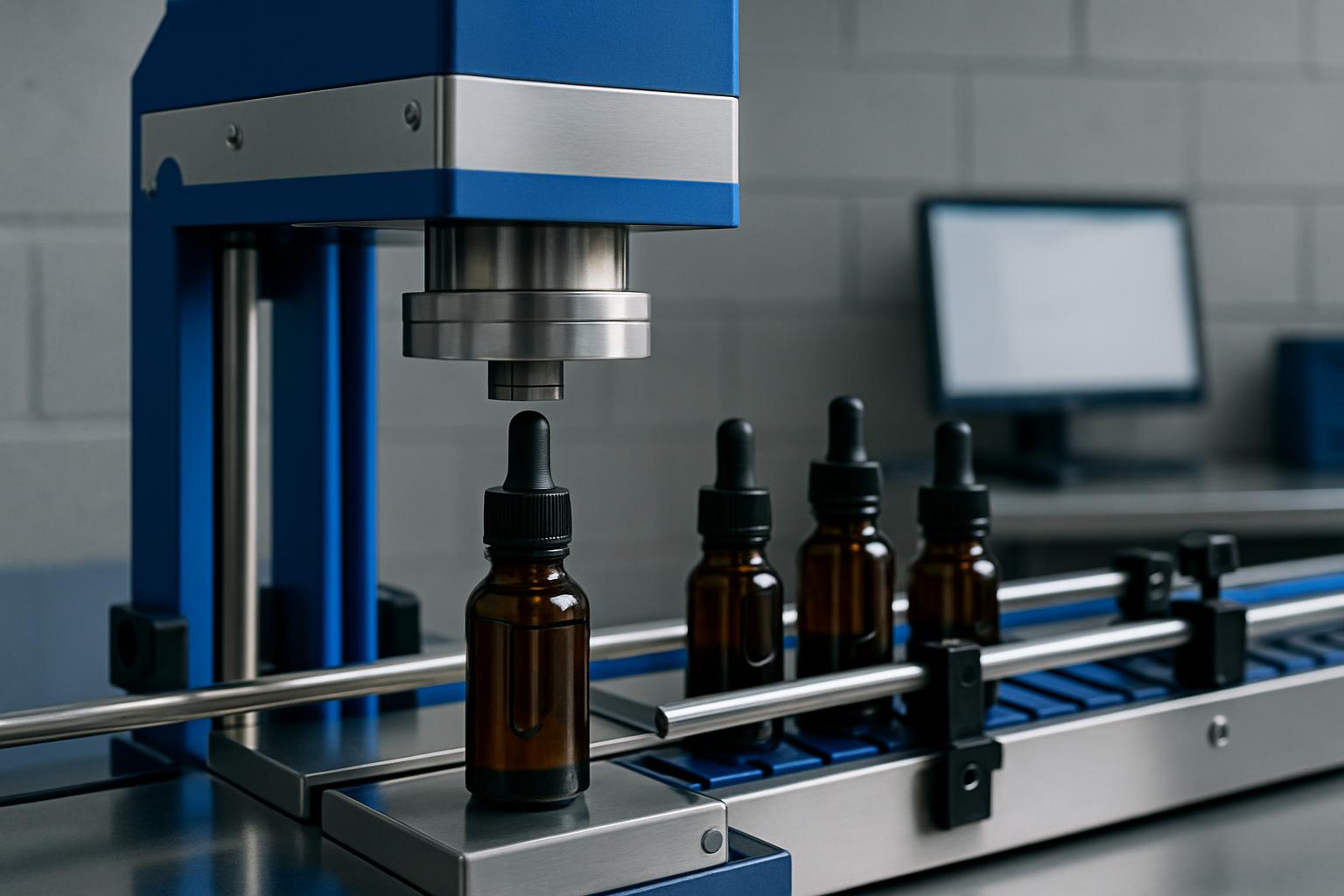
CBD and wellness oil lines in South African plants often handle 10 to 100 ml PET or HDPE bottles with dropper caps, screw caps or tamper-evident closures. The product is oily, often filled in short batches, and any splash on the bottle land can block the aluminium liner from bonding cleanly. Plant managers want a tidy foil seal, steady cap feel and quick changeover between wellness SKUs.
CBD packs and fill behaviour
The pack challenge starts at the filler. CBD oil creeps along threads, clings to the top land and forms a fine film where the foil must bond. Line setters should control nozzle lift, end-of-fill drip and bottle indexing before changing sealer settings. A round bottle with steady top load gives the capper and induction station a better chance than an oval bottle that rocks through the guides.
Most CBD oil customers work across several neck finishes, with 28, 33, 38 and sometimes 45 mm changes in the same production week. BottleSealer usually starts the brief with the Foil & Die Kit, matching the foil wad and die to the local neck finish. The target is a flat, centred foil that peels cleanly without tearing the bottle mouth.
Seal failures seen on oil drops
Common failures on CBD oils are loose centres, crescent-shaped unsealed areas, scorched spots and small weepers after the bottle is laid on its side. Loose centres usually trace back to low cap pressure, worn cap inserts or a liner sitting proud inside the cap. Crescent marks often come from oil tracked across part of the sealing face, bottle wobble, or a cap that has not seated squarely.
Scorching is a set-up fault, not a badge of a stronger seal. Too much heat input can wrinkle the liner, distort soft PET shoulders and form a brown ring that retail buyers notice. Under-heating produces a foil that looks attached until a courier carton is shaken. Operators should pull samples at start-up, whenever closures or liners are swapped, and after a jam, pause or refeed.
Recommended set-up and line sequence
For R&D batches, contract packing and slower wellness runs, BottleSealer pairs the Foil & Die Kit with the Seal Induction Compact. The compact bench unit is rated for up to 25 bpm, which suits CBD oil changeovers where the operator is also watching fill height, cap feel and label alignment. Height setting, power level and belt pace are recorded against each bottle and cap combination.
Where cap feel is part of the retail finish, the Cap Torque Station is added ahead of sealing. Servo torque and stored recipes keep the closure pressing the liner against the neck land in the same way from batch to batch. The line sequence is filler, drip control, cap placement, torque setting, induction sealing, sample hold, labelling and carton or case packing.
Maintenance leads should watch capper inserts, torque head pads, guide rail rub points and sensor timing on small CBD bottles. Oil mist attracts dust, so daily cleaning around the cap chute and sealing station pays back during the next SKU swap. Keep change parts labelled by neck size, store oil-contact cleaning cloths away from foil liners, and keep one signed sample from each CBD batch for comparison when courier leak queries come back.
Typical customer situation
A CBD co-packer asked for quieter cap control and fewer foil rejects on mixed wellness oils, with frequent moves between 28, 33 and 38 mm packs. The set-up used matched foil wads and dies, a benchtop induction station for the batch sizes, and torque recipes for each closure. Their line setter received a start-up card covering first-bottle checks, stop-start checks and the action to take when oil appears on the bottle land.
What our Bottle Sealing customers say
Verified Google reviews