
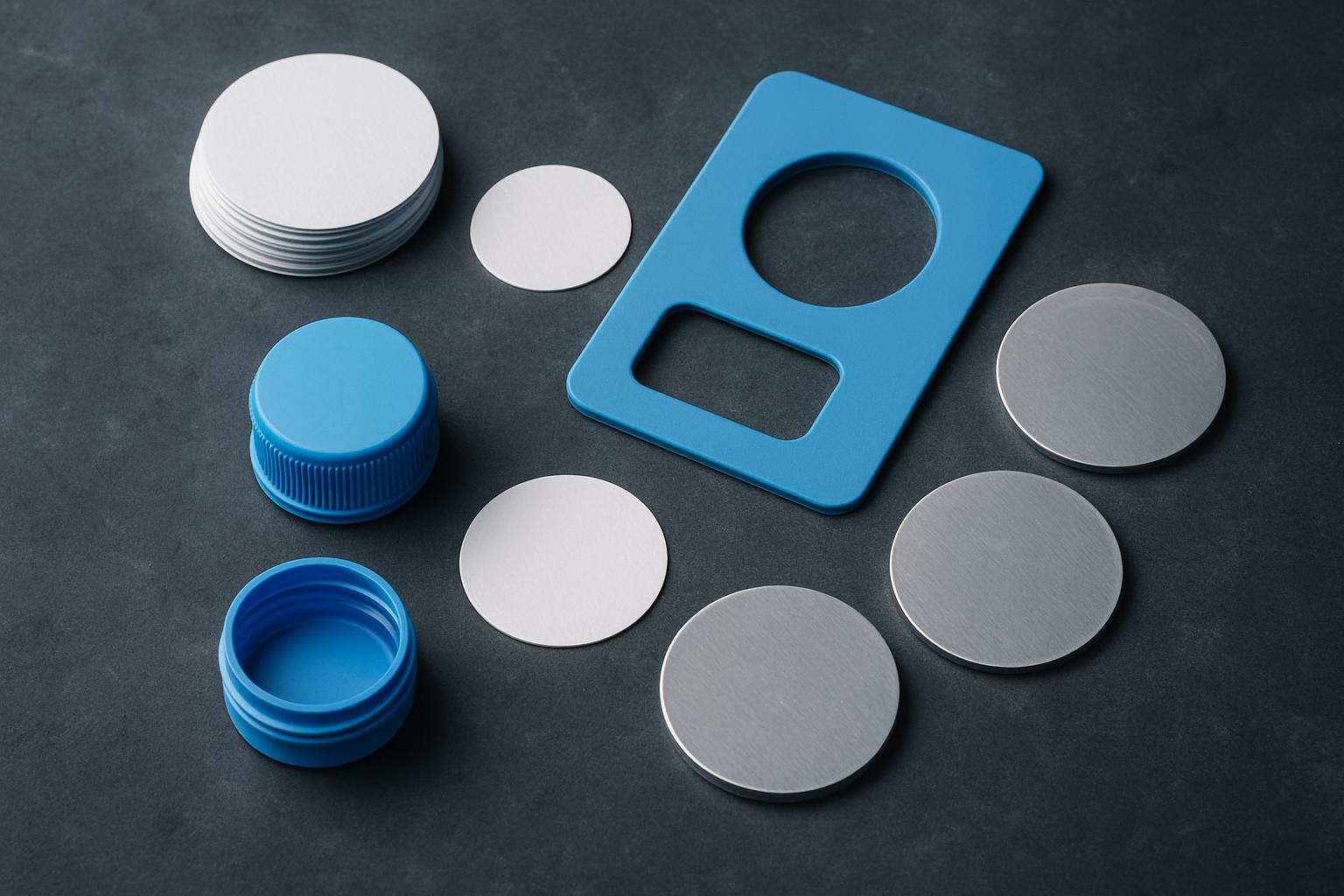
Foil & Die Kit
The Foil & Die Kit supplies induction foil wads and cutting dies for BottleSealer's induction sealers, so the liner selected at changeover matches the bottle finish running that shift. On the floor, the setter picks the wad stack and paired die before capped containers reach the induction head. The target is a clean bond between the aluminium liner’s heat-seal layer and the bottle land.
It suits plants that run several closures through one packing area. A Polokwane juice plant moving between PET neck finishes, a Germiston edible oil line changing from small retail packs to larger HDPE containers, or a Pietermaritzburg pharma syrup room with short batches all need the same discipline: keep the wad size, cap, bottle neck and die together from start-up to last case.
Where it sits in the sealing routine
The kit sits in the changeover routine, not in the powered part of the sealer. Before sealing starts, the operator confirms the bottle land is clean, the cap liner stack is correct, the capper is applying steady torque, and the selected die matches the measured finish. The Foil & Die Kit specs list the neck sizes covered.
After the die and wad set is chosen, bottles are capped and carried under the induction head on the conveyor or presented on the bench unit. The setter sets the sealer for that closure and pulls early samples. Good samples show a centred foil, a full ring bond on the land, and no weeping when the bottle is inverted or squeezed.
What the first shift looks like
On the first shift, start with one neck finish and keep the other wad stacks closed until the next run. The setter marks the job card with bottle, cap, wad and die details, then runs a short start-up group. Maintenance or QA opens samples, checks foil position and peel, and records any cap torque change before steady packing.
Common first-shift faults are practical ones. A wad that is too small can produce a weak edge. A cap applied off-thread can scuff the liner before heating. Product on the bottle land can create a channel under the foil. Excess heat can crease the wad face or leave a heat mark on light PET near the finish. These faults are found faster when samples are cut open at the line.
Changeover and storage discipline
A neat changeover keeps the Foil & Die Kit productive. Clean the die face, remove loose foil dust, and keep wad stacks flat in their sleeves or bags until needed. The foil tray storage insert can sit beside the line to separate wad sets during SKU swaps, so the outgoing closure does not get mixed into the next batch.
Maintenance checks belong with the kit as much as with the sealer. Look for burrs on die edges, crushed wad stacks, damp packaging, and caps that grip the liner too tightly or too loosely. The Foil & Die Kit service notes cover the handling checks that keep die swaps tidy across repeated production days.
Fit notes for the right BottleSealer model
For a continuous conveyor line with PET or HDPE bottles, the Foil & Die Kit pairs well with Seal Induction Pro, where the setter can lock in a repeatable running height and sample routine for each closure. For R&D, pilot batches, export samples and smaller contract packs, Seal Induction Compact brings the same wad selection routine onto a benchtop unit.
For hand-packed farm products, market batches and trial packs that move at operator pace, Manual Hand Sealer is the better match with the same attention to wad size and cap torque. For die matching, mark sample caps with the bottle material, nominal neck size and liner type so the correct wad and cutting die can be checked against the actual finish.
| Rate band | Die changes on demand |
|---|---|
| Power / utilities | No separate utility |
| Neck / format | 28, 33, 38, 45 mm trays |
What our Bottle Sealing customers say
Verified Google reviews
