
Cap Torque Station
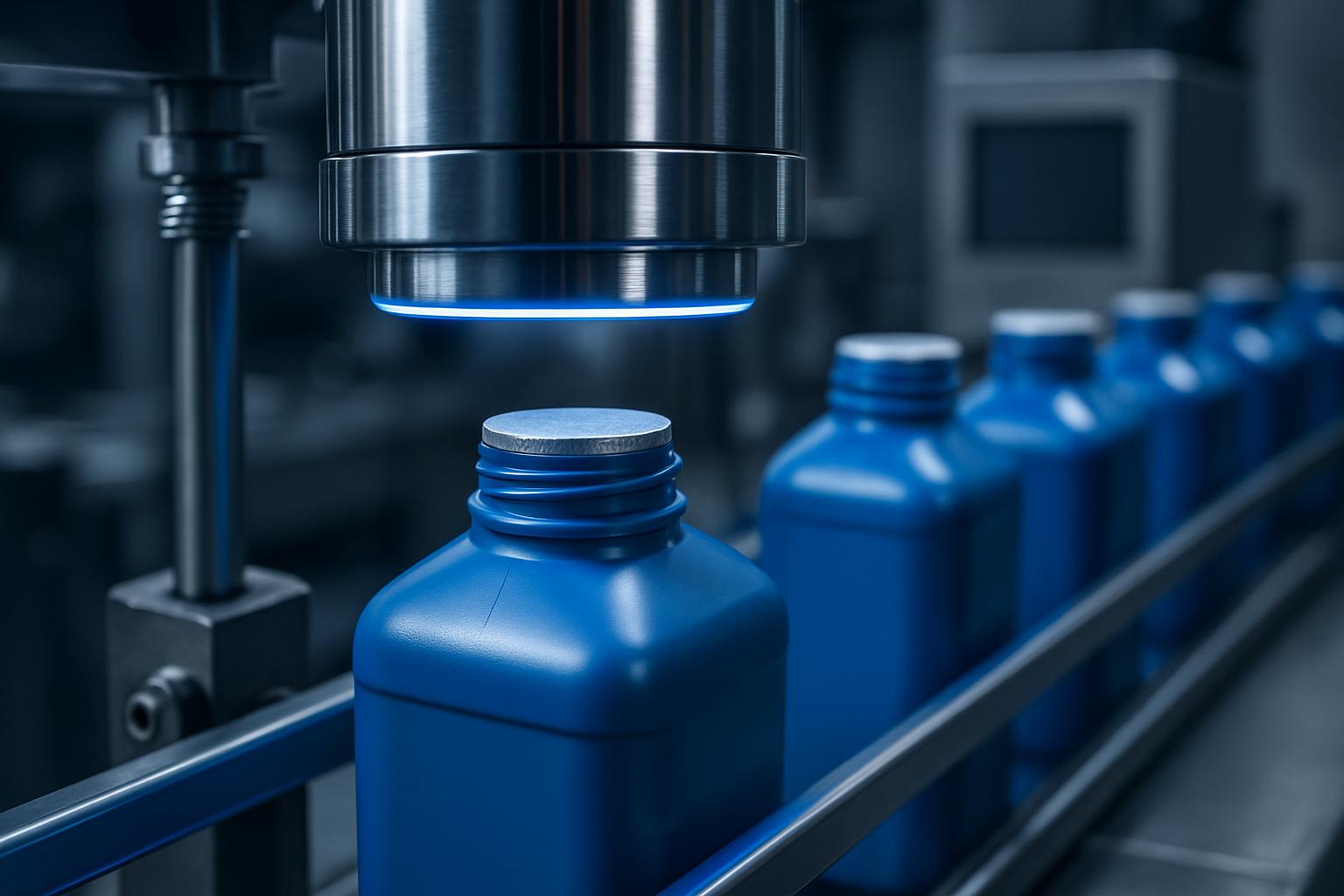
The Cap Torque Station is a servo torque capper for packing floors where one conveyor sees several closures in a day. It tightens each cap to a stored recipe, giving the liner even compression on the neck finish before the bottle moves into sealing. Setters use it to cut loose caps, scuffed closures, crushed necks and repeated hand-adjustment during SKU swaps.
On the line, the station sits after filling and cap placement. Bottles then move to foil sealing, neck banding, labelling or cartons. Before production, the setter checks bottle support, guide position, cap feed, torque head pad and recipe name. Layout details are on the Cap Torque Station specs sheet.
South African packing situations
A beverage co-packer in Midrand can use the station when a morning run uses a sports cap and the afternoon run changes to a flat cap on the same bottle family. The operator recalls the saved torque, runs sample bottles, signs off cap height and sends product forward to the sealer or band cell.
A sauce or condiment plant in Durban can use it where cap supplier, liner thickness and bottle shoulder shape vary between products. The floor problem is often a cap that feels tight by hand but lifts or leaks later. The saved value gives the setter a measured starting point at every flavour change, instead of chasing the fault once cartons are packed.
A nutraceutical or personal-care filler in Centurion can use it when short batches share a conveyor but use different cap diameters. Changeover work stays at the panel, guides and torque head pad. For continuous foil sealing after the cap is settled, pair the capper with Seal Induction Pro.
First shift with the station
At shift start, the setter should have wiped rails, a dry belt area, the correct pad fitted and the current caps placed at the machine for the first run. The setter loads the first recipe, runs bottles slowly, then checks cap height, cap lean, thread pick-up and operator reach around the guarding. Maintenance watches for bottle rocking and guide rub.
Once the first product is stable, the team records the recipe name against the SKU, cap supplier, neck finish and liner type. The next product proves the changeover: adjust guides, fit the next pad if needed, call up the second recipe and run samples. Recipe names should be clear to the early shift.
Faults found at capping
Under-torque shows up as caps that back off in handling, liners that do not sit flat and leaks after the bottle is squeezed or boxed. Over-torque shows up as stripped threads, oval necks, torn tamper bridges and rubbed cap tops. The station gives setters one repeatable adjustment point before sealing or packing.
Maintenance checks are physical: keep pads clean, replace glazed pads before they polish cap tops, keep bottle supports square and check that sensors see the bottle at the same point each time. Service work should include recipe back-up, drive inspection and wear checks on guides and hold-down parts, covered on the Cap Torque Station service page.
Fit with neighbouring equipment
When the task is tamper evidence around a tight cap and neck, Band Shrink 120 is the stronger match for sleeve application and steam shrinking. For R&D batches, market samples or hand-paced pilot work, Seal Induction Compact suits benchtop foil sealing after caps have been applied by hand. For a torque trial, send closure details, bottle photos and liner notes through our contact form, or bring the matching parts to Meadowdale Industrial, Germiston.
| Rate band | Up to 90 bpm |
|---|---|
| Power / utilities | Servo 1.5 kW |
| Neck / format | Recipe torque bands |
What our Bottle Sealing customers say
Verified Google reviews