Line
Pharma syrups
Syrup and oral liquid bottles with careful compact induction on short runs.
Pharma syrups
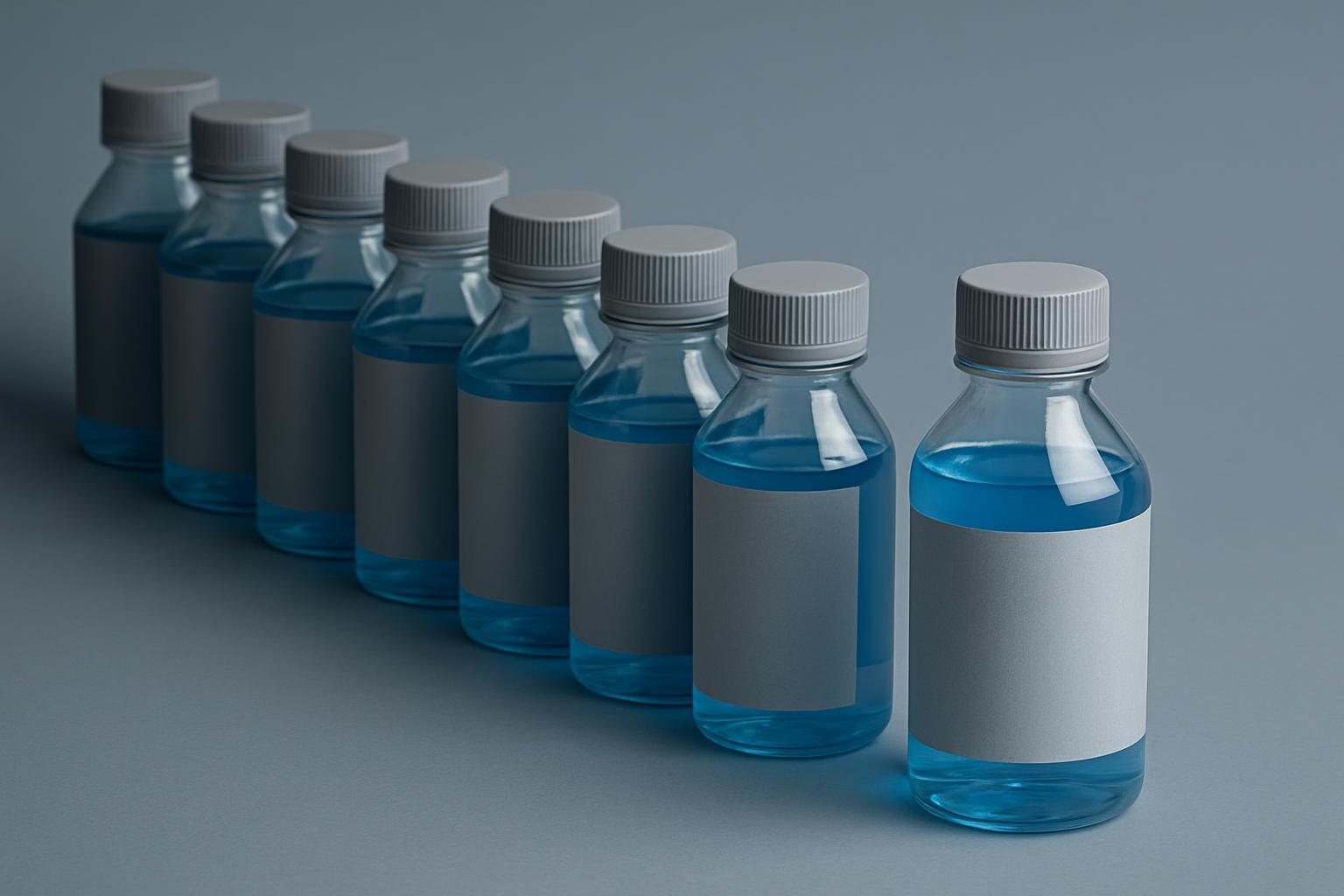
Pharma syrup lines in South African plants commonly run amber or natural PET and HDPE oral liquid bottles with screw caps, child-resistant caps, measuring-cup caps and tamper-evident closures. The fill is sticky, viscous and often strings at the nozzle, so the sealing station sees sugar residue, cap dust and short campaign changes between flavours, strengths and bottle sizes.
The pack target is a clean aluminium foil bond under the cap, a closure that the patient or caregiver can open, and a bottle that reaches cartons without syrup creeping into the label area. Small batch pharmaceutical rooms and contract packers often use a benchtop induction cell because operators can set, test and release a syrup run without moving the main packing line.
Where syrup seals fail
Most syrup seal complaints start at the bottle land. A wet neck, syrup thread across the rim, oval PET neck or a cap started at an angle can leave a channel in the heat-seal layer. That channel may only show after the bottle lies on its side in a shipper, when syrup follows the weak path and stains the carton.
Cap torque sets the liner contact. Too little torque gives poor contact; over-torque can pull the cap crown down, crease the wad or make the pack hard for a caregiver to open. Wrong wad choice shows as patchy bonding, scorched board, foil lifting in one piece, or foil tearing without staying bonded to the bottle land. Setters should record capper setting, neck finish, wad type and first-off result for each syrup SKU.
Recommended short-run set-up
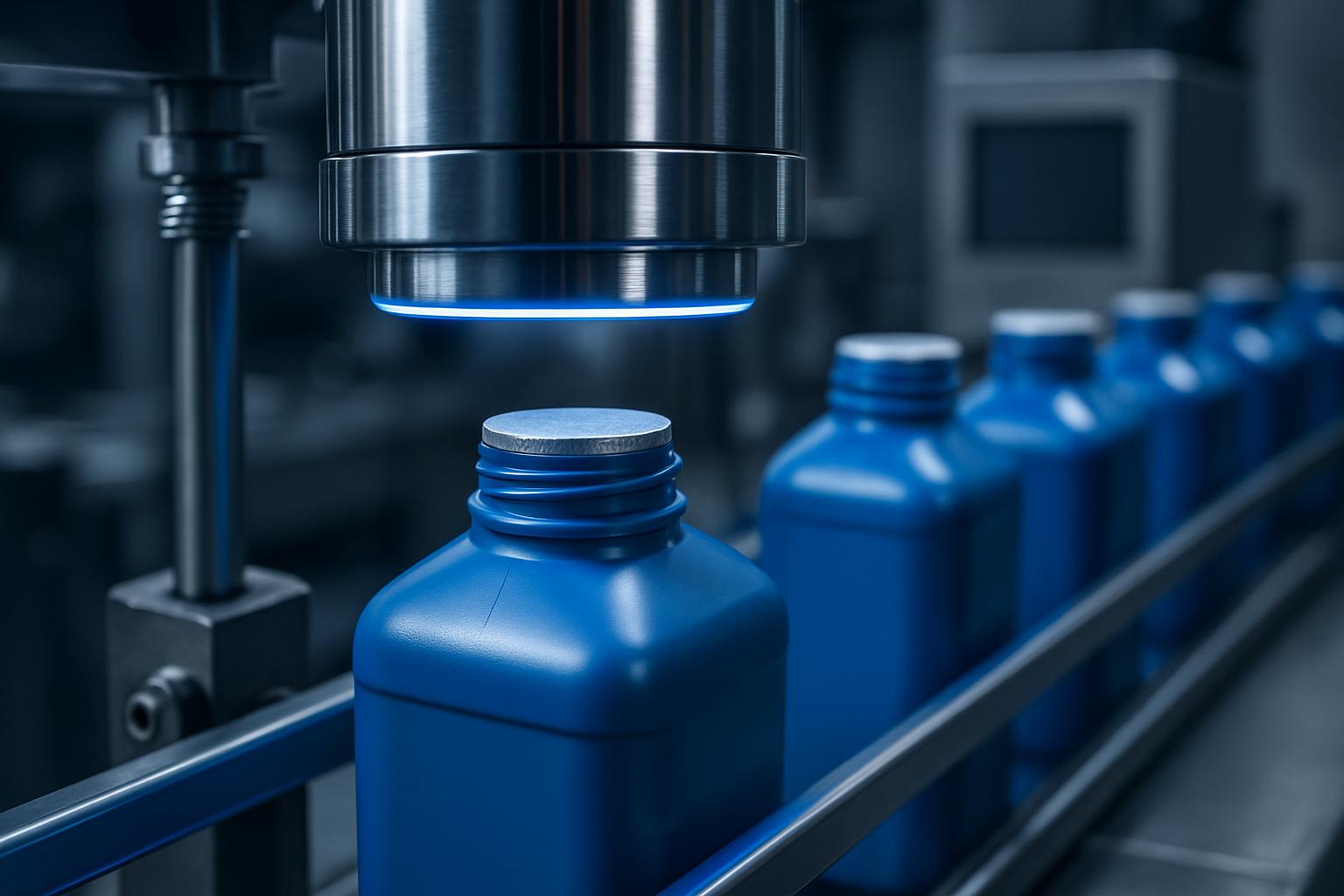
For short syrup campaigns, the Seal Induction Compact gives a bench-mounted station for capped oral liquid bottles, with practical output up to 25 bpm while operators test first-offs between batches. It suits R&D rooms, hospital supply batches and contract packers changing between oral liquids during the day. The unit sits near the capped-bottle outfeed, with guides holding the bottle square as it passes through the sealing point.
Foil control sits beside the line. With the Foil & Die Kit, setters trial wad diameters and punch tooling against local syrup bottle necks, including common child-resistant and measuring-cup closure formats. For retail packs needing a visible neck tamper band over the cap, a Band Shrink 120 can be placed after foil sealing, with the foil bond and the outer band checked as separate pack features.
From filler to case packing
A syrup bottle should leave the filler with a clean neck finish, then pass through cap placing and torque capping before induction. The first bottles after start-up are opened and checked for foil position, bond pattern and syrup residue. Released bottles move to labelling, coding, leaflet or spoon packing where used, cartoning and case packing.
The handover between filling and sealing matters on viscous oral liquids. Nozzle drip, splashback and bottle bounce create repeat failures if nobody owns that point. A practical syrup cell uses an operator wipe point at start-up, guide rails through the sealer, a reject tub for first-off tests and a written restart note for power interruptions, meal breaks and batch changeovers.
Maintenance and fit notes
Daily care is plain plant work: wipe syrup from guides, belts, capper chucks and sensors; keep wads flat and dry; check that caps are seated before induction; and remove any bottle with a damaged neck. Maintenance leads should inspect the head face, belt tracking, side guides and capper wear after sticky runs because sugar build-up hides in corners and later pulls bottles out of line.
A typical Gauteng contract packer adding paediatric cough syrup and iron tonic asked for a compact cell for short runs, foil matching for two cap sizes and an option for neck bands on retail packs. The set-up used the Compact, matched wads from the kit and a separate band station. For a syrup trial, send the bottle, cap, wad preference and filled-product behaviour notes through our contact form so the test can focus on wet-neck tolerance, opening feel and carton staining risk.
What our Bottle Sealing customers say
Verified Google reviews