Line
Edible oils
Cooking oil and specialty oil bottles where leak-free induction seals matter for export.
Edible oils
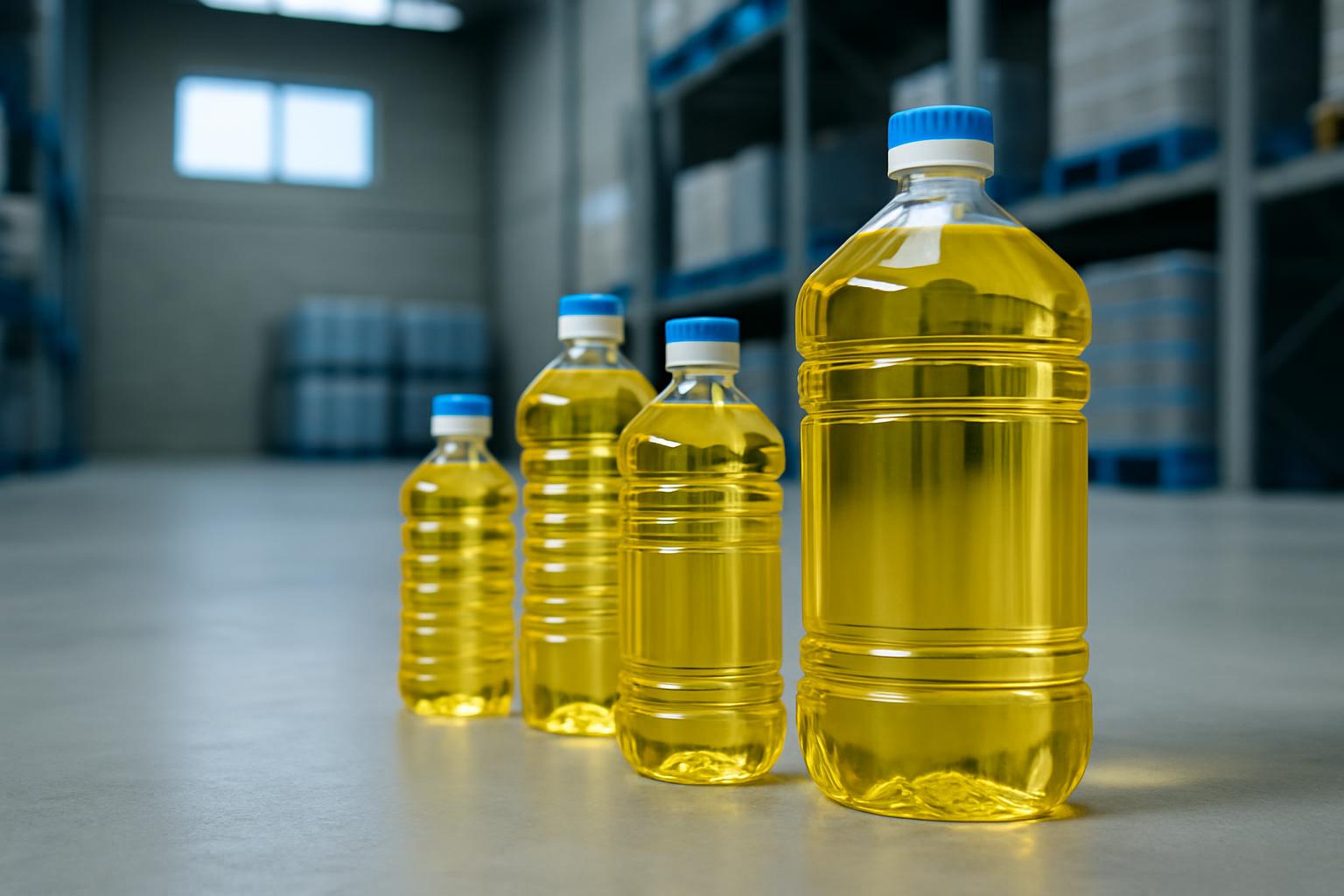
South African edible-oil plants pack sunflower, canola, blended cooking oil, olive oil and speciality seed oils in clear PET, opaque HDPE, square handled bottles, gallon packs and 5 litre jerry formats. Closures are lined screw caps on 28, 33, 38 and 45 mm neck finishes. Export cartons need dry bottles after road vibration and container handling, so oil on the land and weak cap torque get dealt with at the line.
Line flow from filler to packed carton
A clean edible-oil run starts at the filler, where nozzle shut-off must not string oil across the neck finish. Bottles move through drip control, into the capper, through induction sealing, then to sample checks. Once the seal has cooled, the pack goes to labelling, date coding, carton loading, case taping and palletising. Any reject point must sit early enough to keep wet bottles out of cartons.
Tamper sleeves are often added on premium olive oil, speciality oils and retailer packs that get heavy shelf handling. The sleeve station must match bottle pitch and cap height, while the steam tunnel must dry the neck before labelling. For handled 5 litre oil jerries and gallon packs, Steam Tunnel L gives the wider steam chamber used around handles and shoulder changes.
Seal failures seen on oil lines
The usual leak path is a narrow wet channel across the bottle land. It starts when filling puts oil on the rim, when a cap traps a skew liner, or when torque is too light to press the liner flat. A shiny loose foil centre with a bonded outer ring points to oval necks, cap bottoming, or poor liner compression.
Overheated seals show wrinkled foil, brown liner edges or tearing fibres from the wad instead of a clean peel from the neck. Underheated seals lift in one piece with little plastic transfer. These faults appear after bottle, cap or liner changes when the old setting is copied. Mixed cap batches can also shift results because liner thickness and thread depth change.
BottleSealer setup for edible-oil packing
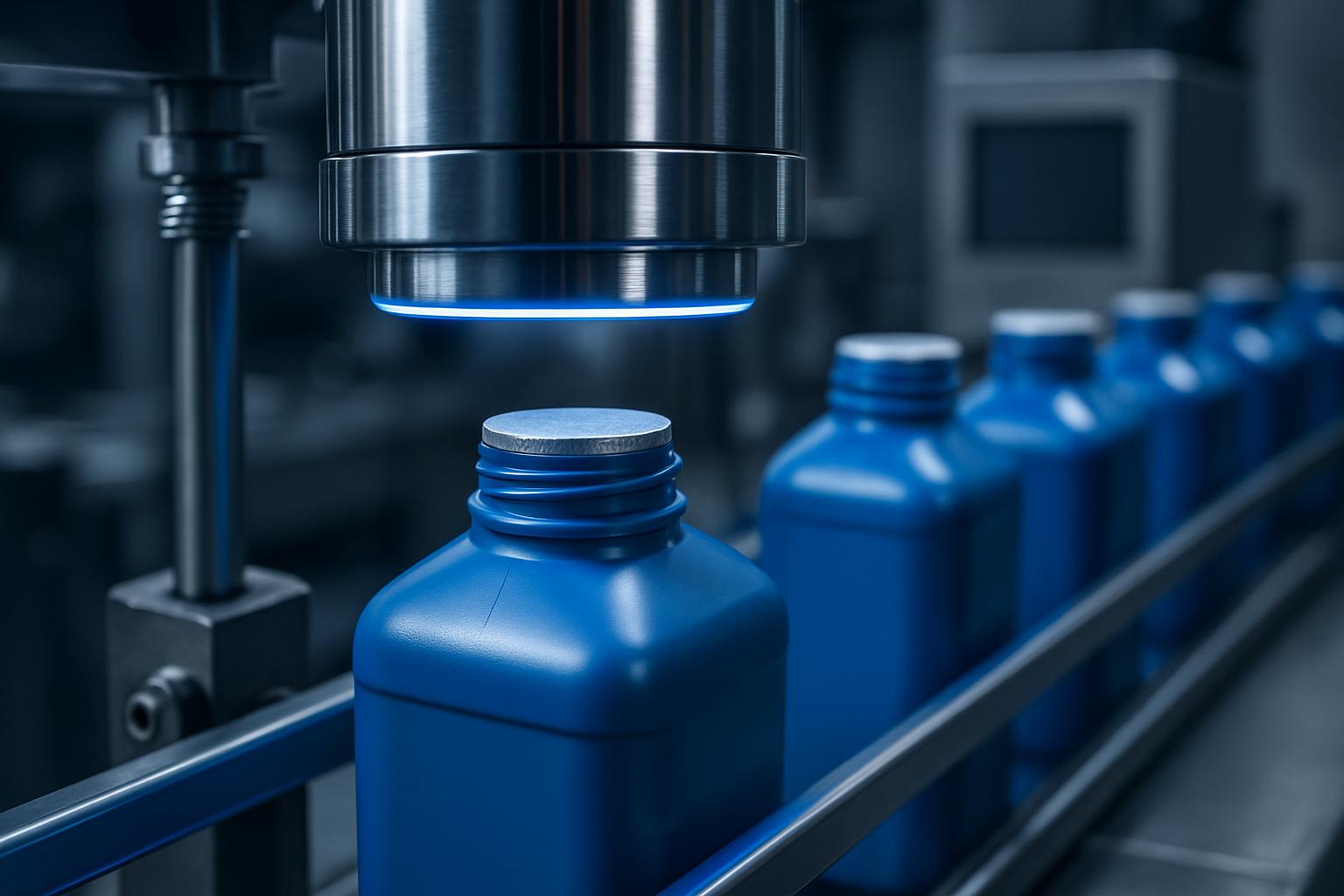
BottleSealer usually starts edible-oil projects with Seal Induction Pro on PET and HDPE oil bottles. The sealer is set after the torque capper, with the head indexed to the running cap height and guide rails set so square bottles do not yaw under the head. Changeover notes cover cap torque, power setting, belt speed, sample timing and the exact foil wad used.
On export and private-label oil runs, Seal Inspect Vision sits after the induction sealer to flag missing foils, caps sitting off-thread and incomplete seal marks before any oily leak reaches carton packing. The camera checks for missing foils, crooked caps and incomplete seal appearance, then an air reject removes suspect bottles before cartons hide the fault. Maintenance routines stay practical: clean capper chucks, wipe oil mist from sensors and light bars, confirm reject timing after speed changes, and record sample results per shift.
Typical edible-oil customer brief
A Gauteng oil packer asked for one line to run 750 ml speciality oils, 2 litre cooking oil and a 5 litre handled export pack. The request was to stop carton wetting, cut pallet rework and keep sleeve tamper evidence on the larger pack. The set-up used Seal Induction Pro, Seal Inspect Vision and Steam Tunnel L on the jerry and gallon sleeve cell.
During commissioning, the line setter and maintenance lead tested the actual 750 ml, 2 litre and 5 litre packs at Meadowdale Industrial, Germiston, with the cap torque range they planned to run on shift. BottleSealer built the change notes around the weakest pack, the lightweight 2 litre PET bottle, then confirmed the 5 litre format with sleeve shrink and inverted leak testing. For edible-oil projects, send bottle photos, neck size, closure type, liner specification and target line rate through our contact form.
What our Bottle Sealing customers say
Verified Google reviews