
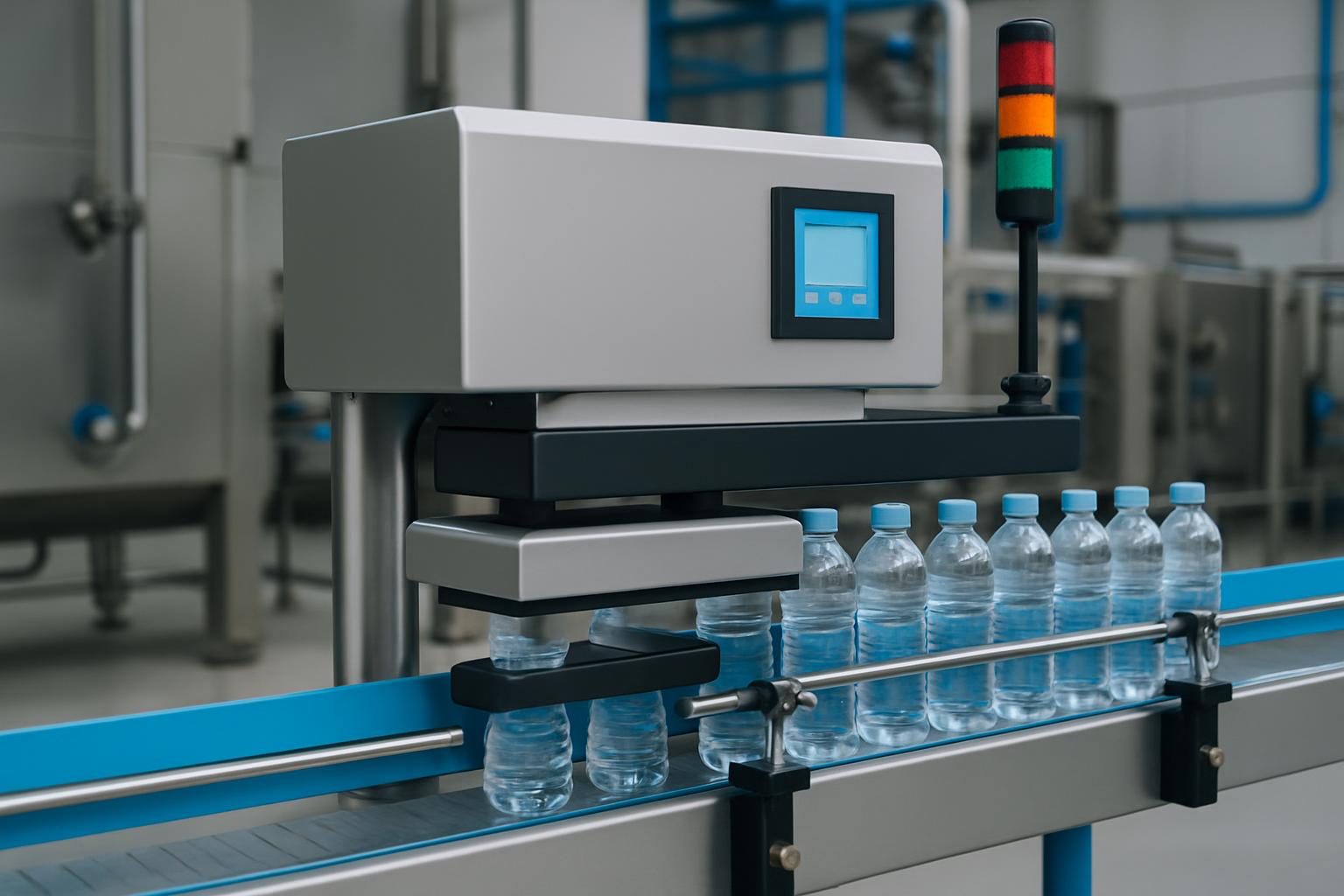
Seal Induction Pro
The Seal Induction Pro is an inline induction sealer for capped PET and HDPE bottles on production conveyors. In floor terms, the filled bottle is capped, torque seats the lined closure squarely on the neck finish, and the pack passes under the induction head without neck contact. After cooling, QA opens samples, peels the liner and checks the sealed face and filled-bottle leakage.
This machine suits lines where the capper can already feed a steady, single-file stream and the plant wants a repeatable liner seal at up to 120 bpm. It covers common 28 to 38 mm South African neck finishes, so it fits many juice, dairy culture, nutraceutical, personal care and household chemical packs that use PET or HDPE bottles with lined closures.
South African packing situations
In a Paarl juice plant, the Seal Induction Pro can sit after a rotary capper on PET breakfast drinks and nectar bottles. The line setter confirms cap torque, checks that the correct lined closure is in the hopper, then runs the first tray of capped bottles through slowly. Early peel checks tell the team whether the liner has bonded evenly around the full land.
In an Ekurhuleni household chemical plant, HDPE detergent and sanitiser bottles often show the truth of the upstream setup. Wet bottle lands, skew caps, damaged necks and mixed liner stock appear as one-sided seals or loose centres. The induction station gives maintenance and QA a clear inspection point, while the setter works back through filling splash, cap angle and guide pressure.
Line position and first shift
The working order is fill, cap, torque check, induction seal, sample check, then coding, labelling, packing or camera inspection. A short straight section before the head lets bottles settle after capping. Where the existing conveyor needs a neater mounted bay, the Line Integration Rail supplies a guided section with sensors and a reject point for start-up faults or known bad packs.
A good first shift starts with clean bottle lands, matched caps and liners, and one signed-off capper setting per SKU. The line setter begins with a short trial run, watches bottle travel under the head, then raises speed to the planned rate. QA lets samples cool before peel testing, records the seal face result, and inverts selected filled packs from the first accepted batch.
Shift notes should record the SKU, bottle, closure, liner, capper torque value, head height setting and conveyor setting. Those notes matter on the next changeover when a weak seal appears after lunch or after power-cut restart. Engineering teams planning the bay can use the Seal Induction Pro specs for power, footprint and integration checks.
Maintenance and model fit
Daily care is practical line-side work: wipe cap dust from the head area, keep cooling vents open, check guide fasteners, confirm sensor trigger points and remove product build-up near the cap path. Weekly checks should include belt condition, reject timing where fitted, capper handoff and stored seal records. For planned visits, fault tracing and parts planning, use Seal Induction Pro service.
Choose the model around the pack flow. The Seal Induction Pro matches continuous PET and HDPE production where lined caps need an inline seal step. For benchtop R&D, lab batches and short contract packing, use the Seal Induction Compact. Where inconsistent tightening is the main cause of seal variation, place the Cap Torque Station upstream. For Seal Induction Pro trials, bring capped sample bottles with the actual liner, product residue risk and target line rate noted.
| Rate band | Up to 120 bpm |
|---|---|
| Power / utilities | 3.5 kW coil |
| Neck / format | 28 to 38 mm common SA necks |
What our Bottle Sealing customers say
Verified Google reviews
