
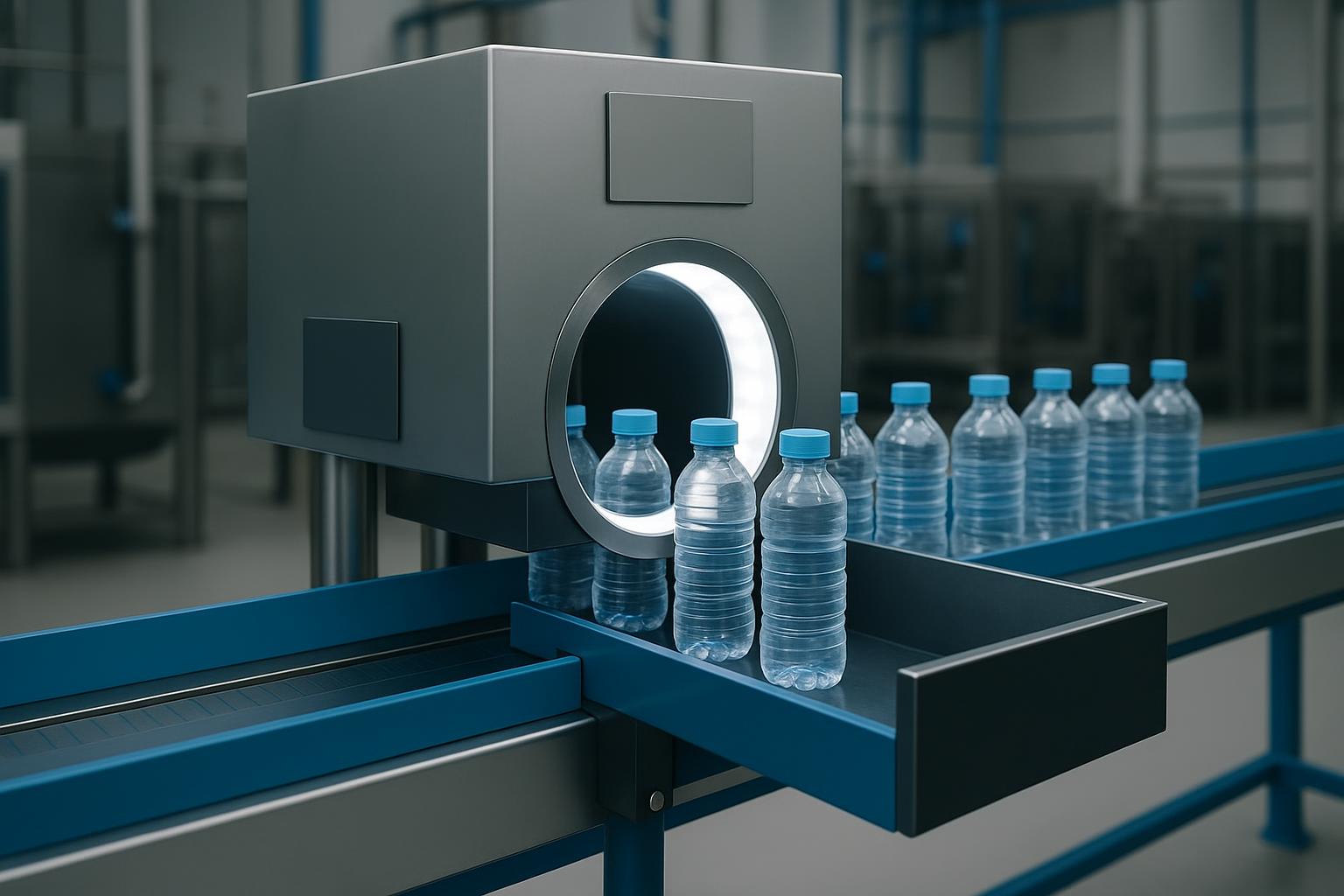
Seal Inspect Vision
Seal Inspect Vision is an inline camera station for capped bottles leaving an induction sealing cell. The LED light bar brightens the cap and neck finish, the camera captures each passing pack, and the controller compares the image against the set inspection window. Missing aluminium foils, partly seated liners and incomplete seals are flagged at production pace, then a timed air blast moves the failed bottle into the reject pocket. For format limits and utilities, see the Seal Inspect Vision specs.
It suits a Durban sauce plant running PET squeeze bottles where a missed liner becomes a sticky carton claim. It suits a Paarl nutraceutical line packing HDPE tablets for retail and export, where operators want a photo-based check after induction sealing. It also suits a Germiston edible oil line using round and handled packs, where a cap may look closed but the foil under it still needs an inline check before finished stock.
Where it sits on the packing line
The station sits after capping and induction sealing, with straight conveyor for steady bottle pitch and a clean reject action. Before it, caps must be torqued, foil liners present, and the seal process already set. Bottle tops should be free of sauce splash, oil mist or cap dust that can confuse the image. After it, passed bottles continue to accumulation, carton loading or case closing, while rejects land in a pocket for inspection and rework decisions.
For retrofits, the camera, light bar, sensor and reject nozzle are fixed to a Line Integration Rail at the point where bottle movement is most settled after sealing. Guide settings keep the bottle centre under the inspection window, while the sensor position sets the camera trigger and reject delay. A good fit has straight entry, straight exit, safe access to the reject pocket and room for an operator to remove failed bottles without reaching across the moving lane.
What the first shift looks like
On the first shift, the setter starts with clean guide rails, clean caps and a known good pack. The recipe is set for the neck finish, the inspection window is drawn around the cap and land area, and several good bottles are run through at slow speed. The team then runs challenge packs: no liner, damaged liner, poorly seated cap and known weak seal. Each fail must be seen on the screen and removed into the reject pocket.
Faults the camera should catch
Typical failures belong to the sealing and handling area, not the case packer. The camera can catch a missing foil after a cap feed upset, a liner sitting off-centre after a capper bump, a visibly incomplete seal after a hot restart, or a format recipe left on the previous neck size. False rejects usually trace back to glare, dirty caps, loose guides, cap colour changes without a recipe update, low reject air, or a sensor moved during cleaning.
Maintenance and model fit
Maintenance leads should keep the lens cover, LED face, sensor bracket and reject nozzle clean, then test a known fail at the start of production and after wash-down. The reject pocket must be clear and the air line free of oil and water carry-over. Service work covers image set-up, trigger timing, reject timing, bracket checks and operator refresher training; inspection support can be booked through Seal Inspect Vision service.
Where the plant still needs the sealing cell ahead of inspection, Seal Induction Pro suits production PET and HDPE bottles feeding into a camera reject station. For lab trials, launch stock and small-batch contract work, Seal Induction Compact gives a benchtop sealing step before inline inspection is added. For Seal Inspect Vision trials, mark sample bottles by fault type so trigger timing, image contrast and reject timing can be checked against the actual pack.
| Rate band | Match line rate |
|---|---|
| Power / utilities | LED + camera |
| Neck / format | Reject air blast |
What our Bottle Sealing customers say
Verified Google reviews
