
Line
Export packing
Export weeks that need documented seal checks before container load.
Export packing
Export packing asks more from a closure than a local delivery. Bottles stand in cartons, ride in pallet stacks, move through container loading and face heat build-up during transit. South African plants use export induction seals on PET and HDPE packs for sauces, edible oils, syrups, detergents and chemical products.
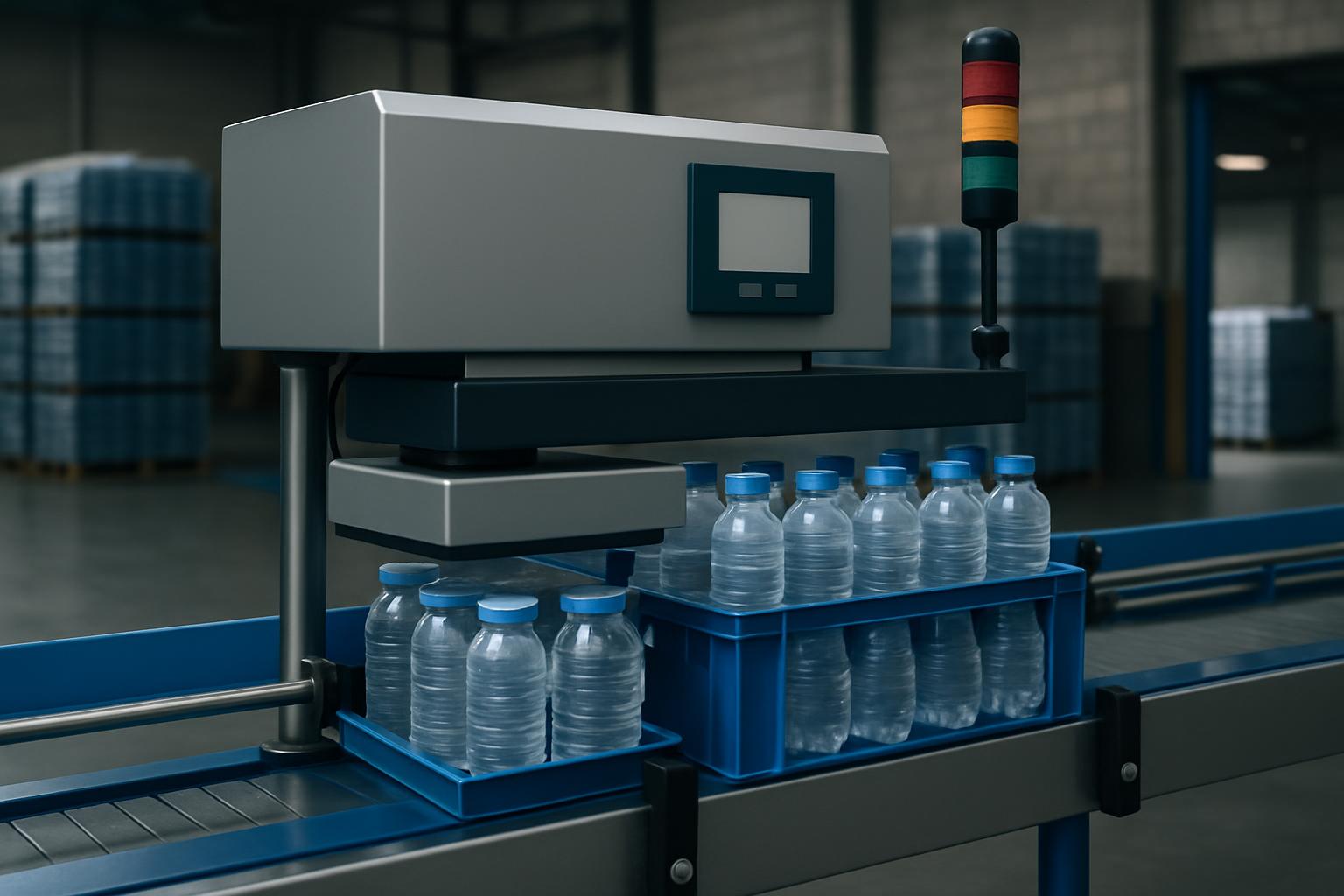
The export pack room needs proof as well as a sound seal. Supervisors want reject counts, retained samples and batch records signed off before pallets move to dispatch. Seal Inspect Vision reads capped bottles with a camera and LED light bar while they are still single-file.
Packs, closures and fill conditions
Export bottles reach the sealing point with several risks already present. A viscous chutney can smear the bottle land. Cooking oil can creep into cap threads during filling and capping. Household chemical bottles may flex when side guides grip too hard. Warm-filled products can carry condensate into the cap area.
Most failures trace back to product on the land, poor cap torque, damaged threads, mixed liner batches or heat set too aggressively for the bottle. Under-torqued caps leave the liner sitting unevenly on the bottle land, so carton vibration can expose weak areas that were missed at cap-on. Excess torque can cup the liner face or squeeze a thin neck out of round before sealing starts. Wrong liner diameter shows up as weepers or patchy peel.
Recommended export line set-up
A practical export cell starts with fill control and cap torque, then passes through Seal Induction Pro for the aluminium liner bond. Setters run peel samples, cap-off inspection and inverted leak samples from start-up bottles and changeover bottles. Seal Inspect Vision follows after a short settling section.
For retrofits, the Line Integration Rail fixes the inspection camera, sensors, side guides and reject station to one common position on the conveyor, which keeps export checks repeatable after cleaning and changeovers. Fit checks include straight bottle presentation, no cap rubbing under guide rails, clean light-bar glass, steady air at the reject and clear space after the reject point.
Sequence from filler to packed carton
The export sequence is filler, cap sorter, capper, torque check, induction sealing, settling time on the moving line, vision inspection, reject confirmation, coding or label control where fitted, carton loading, case marking, palletising and load paperwork. A setter should run first-off samples after every cap, liner, bottle or product change.
Shift maintenance keeps export checks reliable. Clean sauce vapour, oil haze or chemical residue from the camera glass and light bar, confirm sensors still see the cap shoulder and bottle body, clear rejected bottles from the reject pocket and keep spare liners and caps away from wet benches. At the sealer, look for scorched liners, softened necks and loose caps after sealing.
Typical export customer situation
A Gauteng contract packer preparing mixed export pallets of sauces and edible oils needed a check that quarantined any bottle without a verified seal result during a shipment week. Operators were already doing sample leaks, but supervisors wanted every bottle counted as pass, fail or reject before pallet build.
The cell was set up with Seal Induction Pro upstream, Seal Inspect Vision after the settling section and a Line Integration Rail carrying the inspection and reject hardware. Operators were trained to run start-up samples, reject challenge bottles and end-of-batch checks, then file the results with the load paperwork. For export brief work, send bottle, closure, liner and product notes through our contact form so the trial can match the carton, pallet and container handling route.
What our Bottle Sealing customers say
Verified Google reviews
