
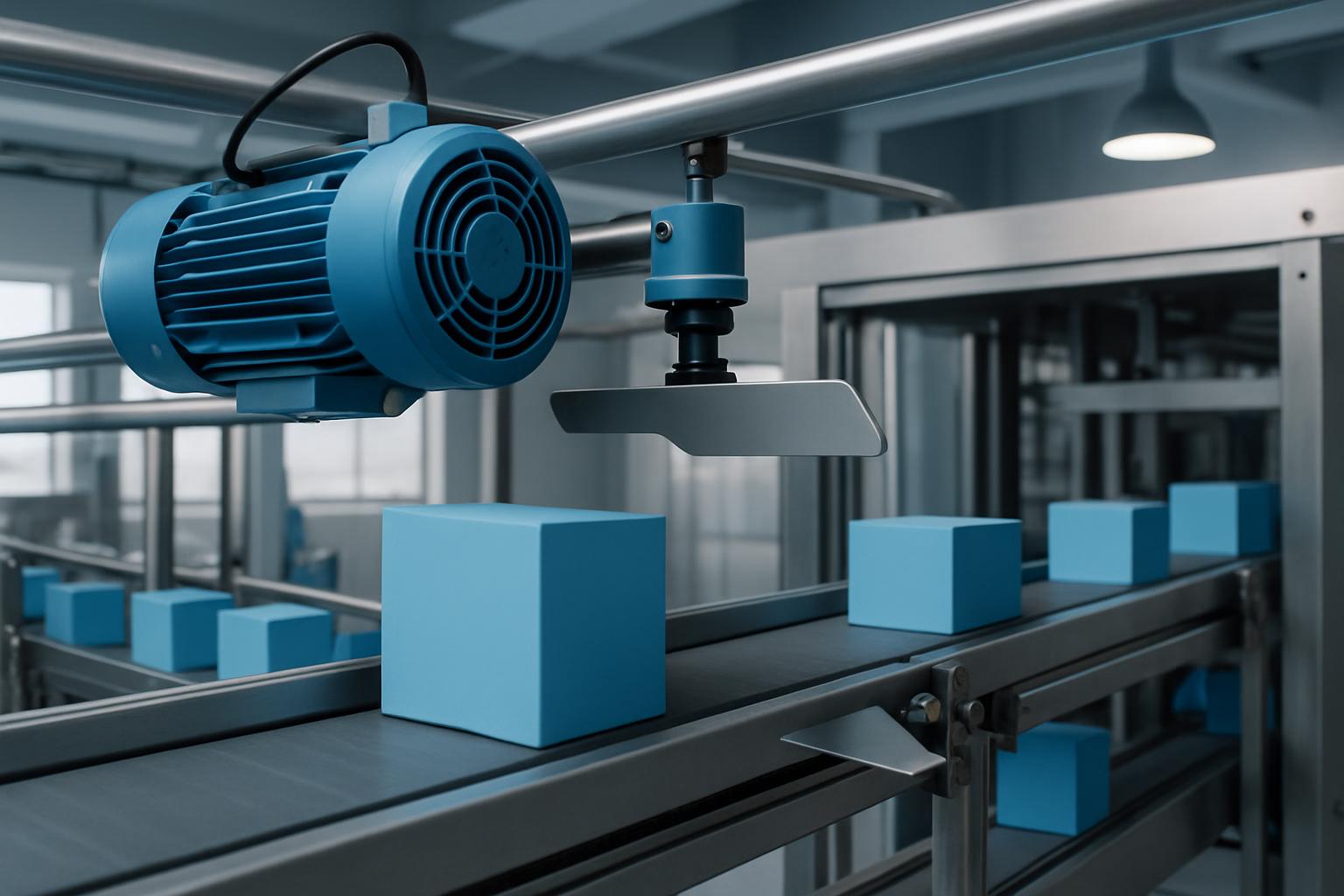
Line Integration Rail
A Line Integration Rail turns a sealing cell into a fixed conveyor station, with guide rails, bottle detection and a dedicated reject pocket arranged on one bottle track. It suits plants where a sealer or inspection point has outgrown loose brackets and temporary stands. Filled, capped bottles enter the rail, travel through a controlled lane, and any flagged pack is pushed out of flow into the reject pocket.
Line setters use the rail to keep PET and HDPE packs tracking straight through induction sealing, seal inspection or a steam-band handoff. The 24 V sensors read bottle presence and pass timing to the conveyor controls, while the adjustable guides are set to the neck and body format in use. Module and sensor details are listed on the Line Integration Rail specs.
South African packing situations
In a Germiston personal-care plant, the rail suits a line changing between lotions, shampoos and household packs during the week. The operator has fixed settings for the sealing bay instead of rebuilding the guide path at every SKU change. Maintenance gets one rail section to inspect when bottles start rubbing, twisting or reaching the reject point late.
In a Paarl sauce or edible-oil plant, the rail gives capped bottles a straighter run through sealing and inspection after filling. In a Durban chemical plant, it can carry the reject hardware for larger HDPE packs where shoulder shape and bottle weight need firm guide contact. These sites usually need repeatable reject timing more than extra machinery.
Position in the line
Mount the rail downstream of capping, where caps have already been seated and torque is stable. Moving-conveyor induction sealing commonly pairs the rail with the Seal Induction Pro. The rail holds the sealer position and keeps the bottle centre line consistent through the sealing point, even when operators are clearing caps, adjusting guides or restarting after a stop.
After the rail, accepted bottles move to label application, accumulation, packing or pallet flow, depending on the plant layout. If the pack needs camera confirmation of foil presence or seal presentation, Seal Inspect Vision can be placed in the same controlled section with the reject pocket mapped to bottle pitch. Steam-band lines use the rail after the steam finish and drying travel.
First shift with the rail
Commissioning starts with empty bottles. The setter squares the rail to the conveyor, sets guide contact, then runs bottles slowly to look for rubbing, rocking and shoulder lift. A marked reject bottle is sent through several times so the sensor read, push timing and pocket entry can be checked before saleable product reaches the sealing cell.
When filled stock starts, the shift records the guide positions, sensor bracket position and reject test result on the changeover sheet. Maintenance checks that lock knobs are tight, the reject pocket is clear, cables are clipped away from operators, and the push action returns cleanly. Service planning for installed rails can be booked through the Line Integration Rail service route.
Fit notes and fault patterns
Common rail faults are floor-level issues: guides set too tight on a soft bottle, a sensor reading the shoulder instead of the travel point, a pocket left full after a stoppage, or a reject stroke arriving after the bottle has passed. The fix starts with bottle samples, conveyor width, direction of travel, pitch and the pack speed actually used on shift.
For benchtop R&D batches, market samples and low-volume contract work, Seal Induction Compact gives the sealing station without conveyor rail work. Where poor cap seating is causing seal rejects, the Cap Torque Station gives torque control ahead of the rail. For a rail build brief, send bottle samples, conveyor width, travel direction, reject side and available straight length through our contact form.
| Rate band | Modular 1.5 to 6 m |
|---|---|
| Power / utilities | 24 V sensors |
| Neck / format | Adjustable guides |
What our Bottle Sealing customers say
Verified Google reviews
