
Line
Juice plant
Juice and nectar plants balancing steam sleeve finish with induction foil.
Juice plant
Juice and nectar plants in South Africa pack PET and HDPE bottles with 28, 33, 38 or 45 mm closures, from single serve RTD packs to family litre bottles. The finish has to look clean on a chilled retail shelf, stand up to sticky product on the neck, and give the packer a clear tamper sign.
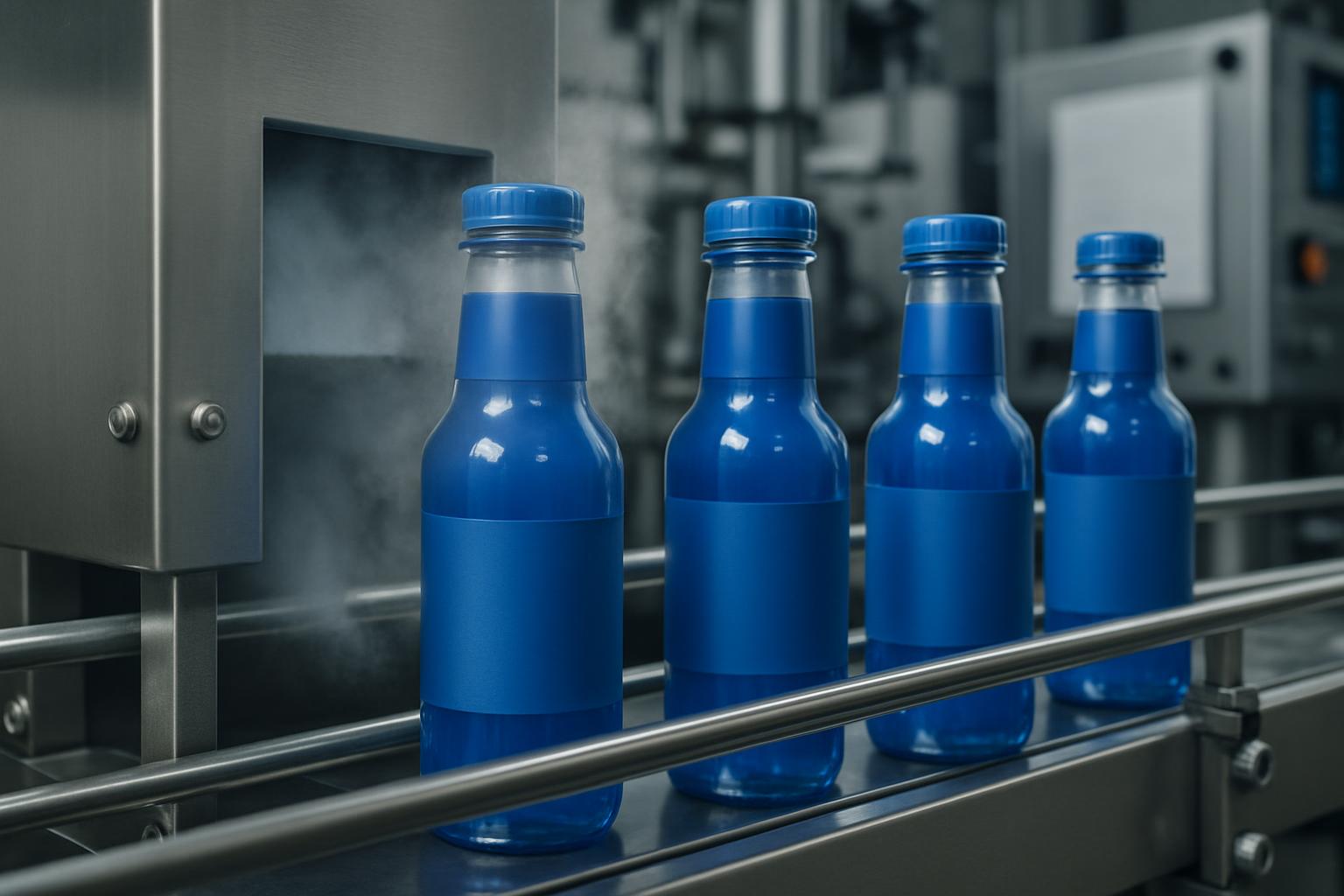
A juice sealing set-up starts at the capper discharge. For sleeve finish work, Steam Tunnel S shrinks the neck band around the closure and shoulder. Where the closure carries an aluminium liner, Seal Induction Pro bonds the liner to the bottle land after torque has pressed it flat.
Packs, closures and fill conditions on juice lines
Juice plants deal with sugar, pulp, acid and condensation in the same packing area. Cold fill bottles may reach the capper with a damp shoulder. Nectar can foam into the headspace and wet the threads under the cap. Hot rinsed bottles can soften slightly at the neck, so cap application, sleeve height, steam contact and drying must be set as one section.
The usual sequence is rinser, filler, capper, torque sample, induction sealing where a foil liner is used, sleeve placing, steam shrinking, drying, date coding, labelling, final checks and carton packing. Good layouts provide room for an operator to pull sample bottles after capping and after shrinking, without reaching through guards or leaning over wet floor areas.
Steam sleeve set-up for juice neck bands
On the steam side, the setter checks sleeve lay-flat width, cut length, tear line position, spacing between bottles and time inside the steam chamber. A neck band that sits too high can wrinkle at the top of the cap. A band cut too short can miss the lower neck bead. Bottles touching each other through the chamber cause uneven shrink and flags on one side.
Condensate control matters on juice because a wet neck can carry sugar into the label area. Operators should check the steam hood gasket, drain path, air wipe and side guides during changeover. A sleeve feed tray should present bands square to the bottle centre line, and guides should support light PET bottles without squeezing the body.
Foil seal faults and what causes them
Foil failures on juice packs usually start before the induction head. If cap torque is low, the wad may sit proud instead of being pressed flat on the finish. Over-tight caps can distort the closure top and leave one edge of the liner unloaded. Juice on the land, pulp fibres on the thread, oval bottle necks, wrong wad face and mixed liner batches all create partial bonds and crescent leaks.
Maintenance leads should keep torque heads clean, confirm liner orientation during cap replenishment and pull samples after long stoppages. If a power cut or a filler stop holds capped bottles on the conveyor, the restart check should include cap tightness, land cleanliness and first case samples. For retail audit packs, Seal Inspect Vision can reject packs where the foil is absent before cartons are closed.
Typical customer situation
A Gauteng juice co-packer asked for one compact section to run short batches of 330 ml juice drinks and larger nectar bottles without rebuilding the conveyor. The problem was not speed alone. The sleeve finish looked good at start-up, then wrinkles appeared after the steam chamber warmed up, and foil samples failed whenever foamy product reached the cap land.
The section was set around the existing filler exit: torque sampling after capping, induction sealing for foil lined closures, then steam shrink with adjusted guides, sleeve height checks and a drying point ahead of coding and labelling. For this type of juice changeover, trial bottles should include cold-filled samples, warm rinsed containers, high-foam nectar and the shortest single-serve pack, because each one exposes a different sleeve or foil setting.
What our Bottle Sealing customers say
Verified Google reviews
