
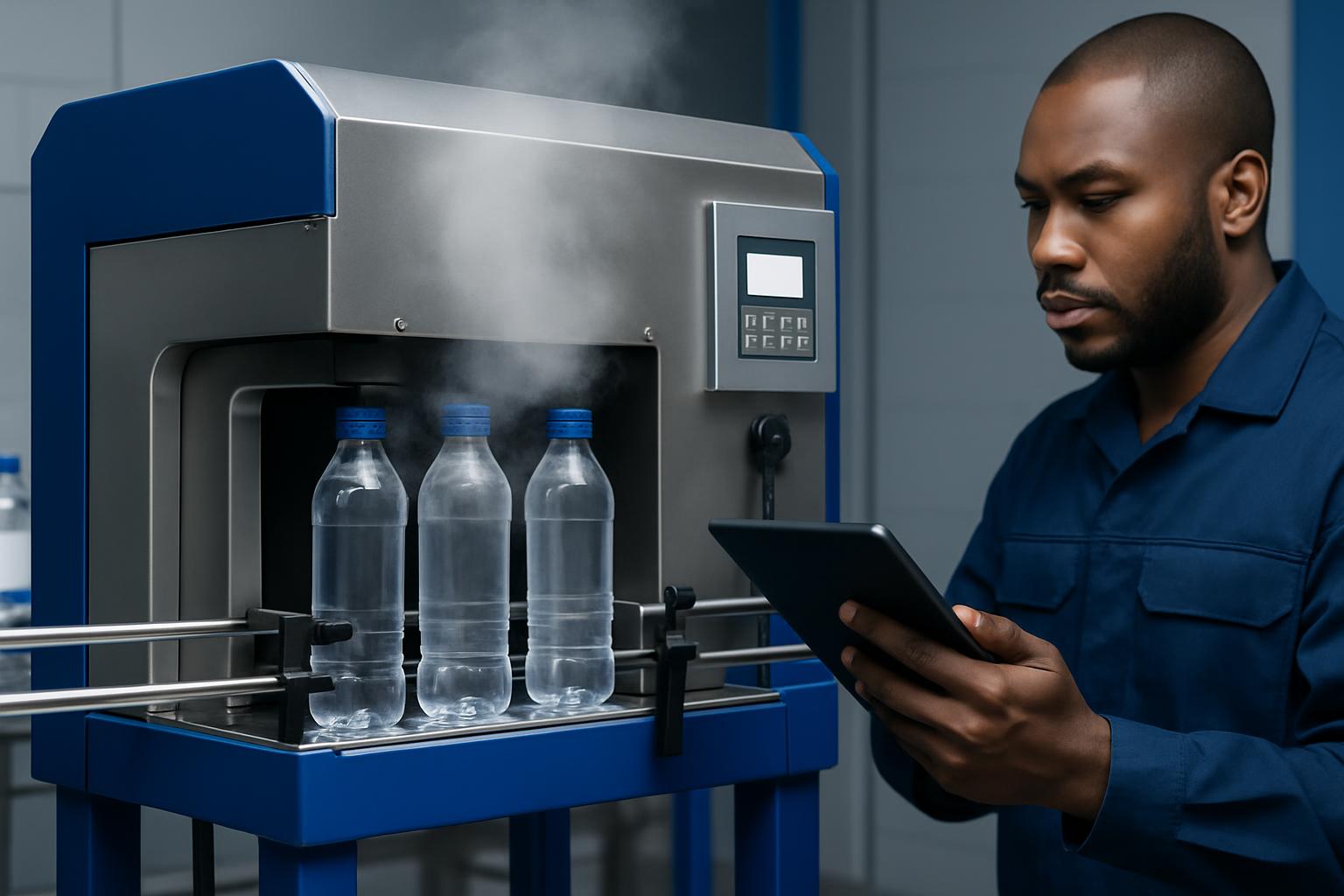
Steam Tunnel S
Steam Tunnel S is a compact steam chamber for finishing neck sleeves on narrow-mouth bottles in short packing cells. After the sleeve is cut and placed over the closure area, steam pulls it tight over the cap skirt, neck bead and bottle shoulder. The setter balances pressure, time in the chamber, bottle spacing and sleeve position so the tear line lands where the operator expects it to open.
This model fits an RTD co-pack cell in Isando, a juice plant near Polokwane packing small neck bottles, and a water line in Bellville where floor metres are tight. It gives the line a short shrink section for neck bands without stretching the cell. The Steam Tunnel S rating is up to 100 bottles per minute, with format notes on the Steam Tunnel S specs.
Line position and handover
On the floor, Steam Tunnel S sits after sleeve placement and cap control. Caps must be seated, the sleeve must be square on the neck, and bottle spacing must leave steam room around each band. Side guides keep the bottle centred through the chamber so shrink is even around the cap and shoulder.
After the tunnel, the line needs a short drying run, drip control and enough open travel for date coding, labelling, tray packing or hand inspection. Cold water, chilled juice and RTD bottles can carry moisture into the chamber, so condensate must be watched at rail edges, transfer points and under the steam hood.
First shift settings
The first shift starts with steam on, drains open and bottles pitched at the planned spacing. The setter puts through a controlled trial of bottles, then inspects the sleeve at the cap edge, neck bead and lower edge. If the sleeve sits high, check sleeve height and lay-flat width before lifting steam pressure. If the perforation twists, straighten sleeve placement and guide the bottle better.
A useful start-up note records the bottle neck, closure height, sleeve cut height, lay-flat size, tear-line position, pressure setting, chamber dwell and drying travel after exit. That gives the next setter a known starting point after a SKU change. The Steam Tunnel S service check covers chamber seals, condensate paths, guide wear and cleaning access with the line team.
Faults seen around the chamber
When one side of the band pulls tighter than the other, look at steam balance, bottle centring and whether bottles are touching as they pass through the chamber. A sleeve that grips the cap but floats at the bottom often needs more dwell or a height correction. A scorched-looking top edge points to too much steam contact for that cap and sleeve combination.
Tear perforation position is a floor-level check on every sleeve roll. If the tear line lands at the back, opening becomes awkward and rework follows. If the perforation sits too close to the cap bead, the band can split during shrink. The operator should check sleeve feed geometry, roll quality and guides before chasing the fault with more steam.
Model fit notes
For plants that want sleeve application and steam finishing in one neck-band station, the Band Shrink 120 is the better match. For peak beverage runs with two sleeve lanes, use Band Shrink 240. Bigger square containers, oil packs and chemical bottles with broad caps need the extra chamber space of Steam Tunnel L.
For a Steam Tunnel S layout check, send photos and measurements of the bottle, cap and sleeve through our contact form, including neck size, closure height, sleeve cut height, tear-line location, planned bottle spacing and available conveyor length around the steam section. Those details show whether the chamber, drying travel and guide positions will suit the pack before the line is moved.
| Rate band | Up to 100 bpm |
|---|---|
| Power / utilities | Steam chamber |
| Neck / format | Narrow mouth focus |
What our Bottle Sealing customers say
Verified Google reviews