
Line
Line retrofit
Retrofitting an existing conveyor with a sealing rail and reject pocket.
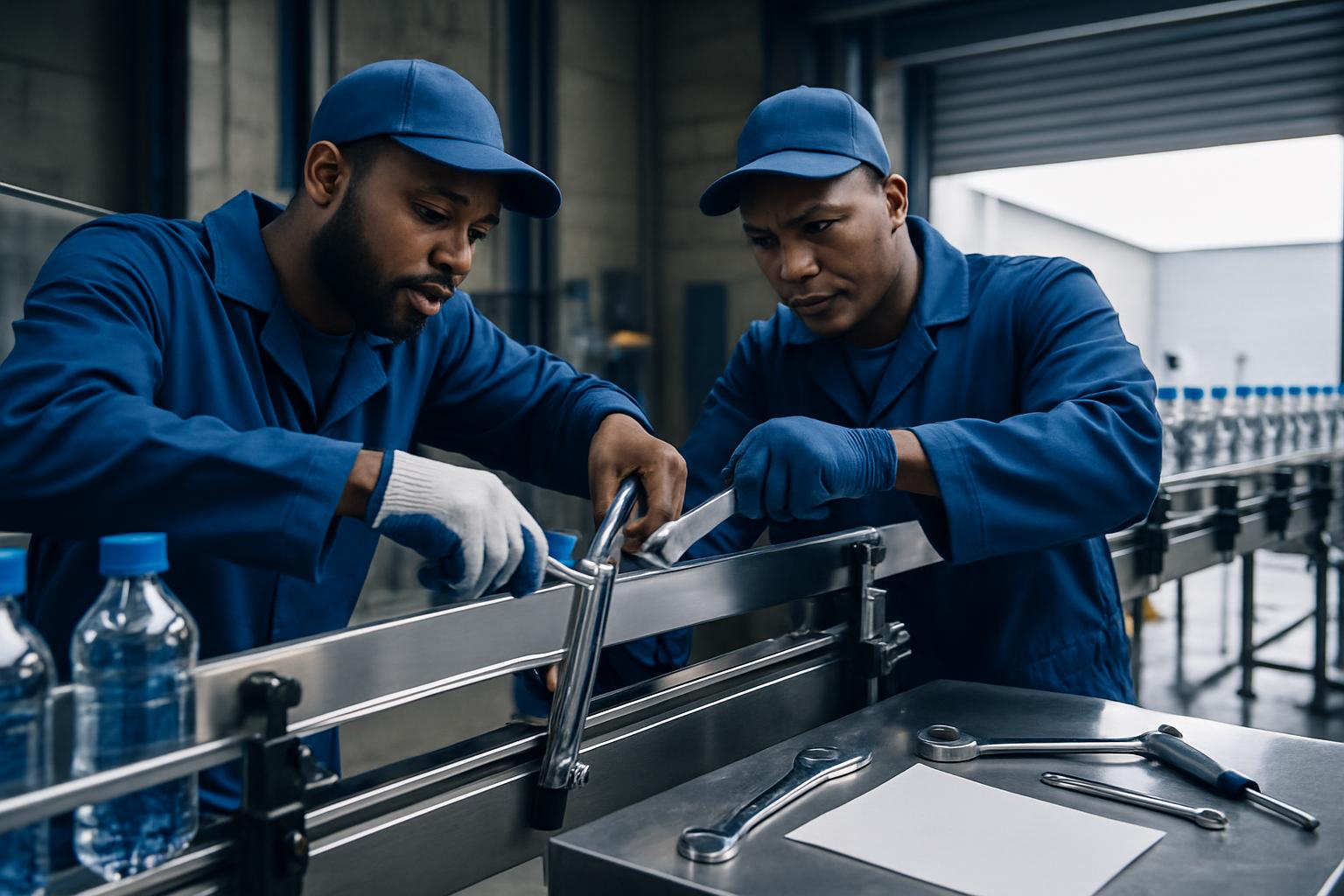
Line retrofit
A line retrofit suits plants that have a working conveyor, filler and capper, but need induction sealing, centring and reject handling in the same bay. The Line Integration Rail is fitted over a straight section, with side guides set to present PET and HDPE bottles square under the sealing station.
The brief starts with the pack. Neck finish, cap skirt depth, bottle shoulder, fill temperature, headspace foam, product on the sealing face and cap torque all change the seal window. Retrofit work is common on sauces, edible oils, household chemicals, pharma syrups and nutraceutical bottles using screw closures with aluminium induction liners.
Where seal failures start on an existing line
Most retrofit seal complaints trace back to upstream conditions. Low cap torque puts the liner unevenly against the bottle mouth. Excess torque can bow the liner, distort the closure or leave the heat-seal layer under uneven pressure. Chilli oil, syrup strings, detergent residue or sauce splash across the bottle mouth can interrupt bonding under the aluminium liner.
Stop-start running creates another set of defects. Packs paused under heat can scorch the liner or wrinkle the heat-seal layer. Bottles that surge after a restart may crowd and enter the sealing station off-centre. Missing liners come from cap handling, so inspection after sealing is fitted where dispatch rejects are costly.
Recommended retrofit set-up
For most South African PET and HDPE retrofit work, the rail is paired with a Seal Induction Pro mounted over the pack path and a reject pocket downstream. The setter records cap torque, head height, power setting, line speed and guide positions for each SKU, then repeats those values after washdown or power-cut stops.
Where missing foils, tilted caps or half-bonded seals have caused rework, the retrofit includes Seal Inspect Vision with a light bar and timed air reject. The reject pocket sits where a flagged bottle can be removed cleanly without knocking good stock. Bottle pitch, sensor timing and air pressure are set with filled production packs.
Sequence from filler to packed case
The working sequence runs from filler to capper, then into the retrofit rail while the cap is holding the liner flat. Guides centre the bottle, the induction head heats the aluminium liner through the cap, and the bottle exits the station without side knock. Operators pull samples for peel, leak and visual checks at set intervals.
After sealing, the line can feed a labeller, sleeve cell, accumulation table or case packer, depending on the plant layout. The retrofit survey checks transfer plates, bottle pitch, capper discharge pressure, open floor space and access for cleaning. Maintenance leads also mark isolation points, cable routes and air supply for the sealer, sensors and reject cylinder.
Typical South African customer situation
A Gauteng co-packer needed one oil and sauce line to run three contract packs: a 500 ml PET sauce bottle, a 1 litre edible oil bottle and a small HDPE chemical pack. Their issue was mixed cap sizes, occasional oil on the bottle mouth and cartons reaching dispatch with unsealed bottles.
The set-up used a rail cell, induction head, indexed guide positions and inspection reject. The commissioning run covered cap torque checks, liner confirmation at cap loading, start-up scrap rules and a signed sample routine for each bottle. For a retrofit survey, send conveyor width, straight-run length, cap sizes, bottle photos and failed samples through our contact form.
What our Bottle Sealing customers say
Verified Google reviews
