
Worcester
Worcester farm stall wand
Manual Hand Sealer for estate stall bottles.
Worcester farm stall wand
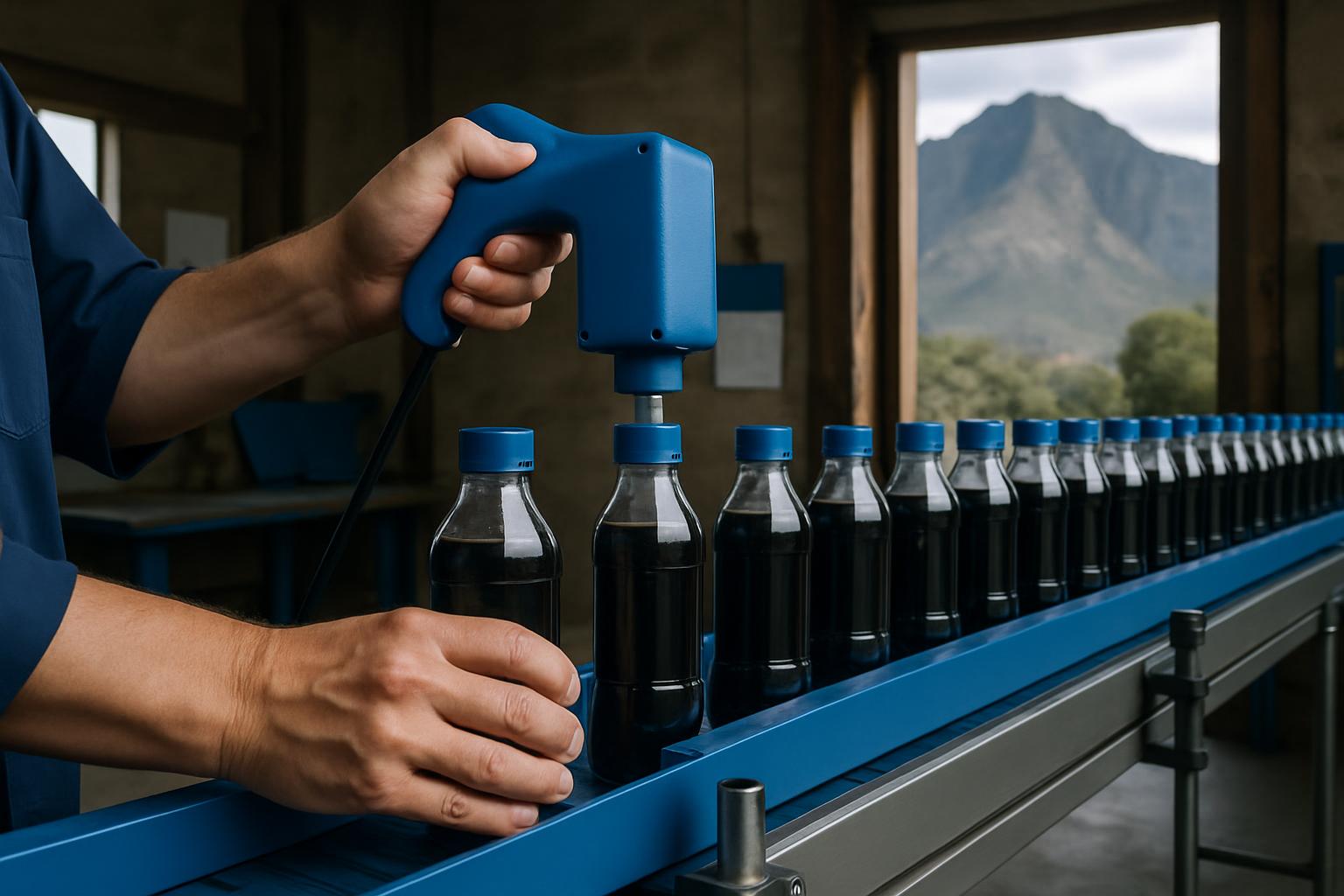
The Worcester farm stall project started with estate juice and preserve bottles sold from the counter after small morning filling runs. Staff wanted a clear first-open sign under the cap without changing the stall layout. The chosen unit was the Manual Hand Sealer, a portable induction wand matched to hand-paced bottling rather than a conveyor cell.
The first packs were glass bottles with a 28 mm neck finish, within the wand’s 20 to 45 mm range. The seal had to sit flat on the glass mouth, stay neat under the cap during handling, and tear visibly when opened by a visitor at home. Presentation mattered because buyers often inspect the bottle before leaving the estate stall.
Survey and bench set-up
The survey checked the stall bench, plug point, filled bottle height, cap type and the way bottles moved from filling to shelves. The sealing point was placed after filling and capping, with a small holding space for cooling. There was no fixed line frame to build, so the work focused on bench discipline, cap seating and repeatable hand timing.
For the 28 mm finish, foil wad fit was checked against the bottle mouth and cap depth. The Foil & Die Kit supplied the first wad format, with die changes available when the estate tests 33, 38 or 45 mm necks. The start-up note covered switch-on, power setting, wand count, cooling time and sample checks.
Commissioning fault and correction
During the first weeks, some preserve bottles showed a weak foil patch on one edge. The foil size and wand setting matched the juice bottles, so the fault was traced through the bench routine. Preserve residue on the glass rim was holding the liner unevenly under the cap, and one operator was shortening the wand count when customers were waiting.
The correction was simple and repeatable. Preserve jars now get a rim wipe before capping, the cap is pressed down and tightened before sealing, and the operator uses the same spoken count for every wand cycle. A marked wand stand position keeps the hand tool parked safely between bottles and away from sticky bench work.
How the stall runs the batch now
A normal Worcester batch now starts with foil wads staged beside the caps and one person controlling the seal point. Juice bottles run first, then preserves, so the bench can be wiped before sticky packs arrive. Finished bottles stand with caps on while the liner cools, and staff open selected samples to check a centred foil, full contact ring and no seepage.
If a sample fails, the team checks rim cleanliness, cap seating and wand count before changing the power setting. That order stops a busy stall from chasing the wrong fault. The same routine fits the broader farm stall pattern, where short batches and mixed products need tidy bench habits more than fixed conveyor hardware.
Care and support after handover
End-of-batch care is part of closing the counter. The wand face is wiped after it cools, the control box is kept away from filling splashes, and 28 mm foils are stored together for the next run. For set-up questions, sample checks and consumable collections, the trade counter is in Meadowdale Industrial, Germiston, and our contact form is the quickest way to reach us.
What our Bottle Sealing customers say
Verified Google reviews