
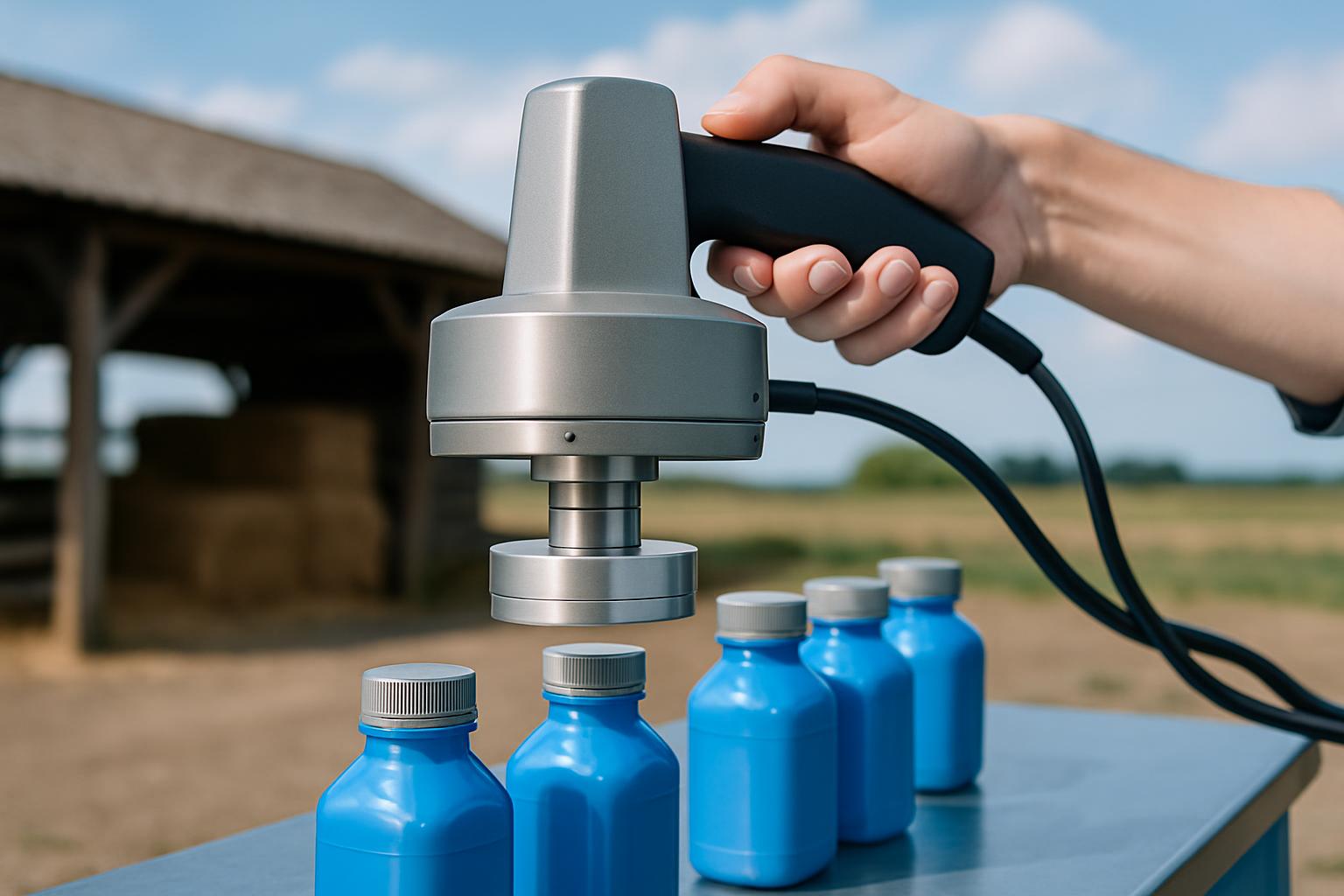
Manual Hand Sealer
The Manual Hand Sealer is a portable induction wand for bench-paced packs with 20 to 45 mm neck finishes. The operator fills, caps and torques the bottle, sets power and dwell on the control unit, then presents each cap to the wand for a timed seal. Finished bottles move to a crate, tray or inspection table for sampling, wipe-down and packing.
In a Worcester preserve room, a farm-stall team can seal sauces and syrups after hand capping, then pack mixed cases for weekend trade. In a Stellenbosch micro-brewery, the wand covers seasonal tasting bottles and club packs. In a Somerset West nutraceutical room, trial oils can be sealed during R&D without sending the whole batch through the main line. See typical bench layouts on the farm-stall line page.
Where it sits in the packing flow
This sealer works at the capping bench. Product is filled first, the cap is applied with enough torque to clamp the aluminium liner evenly against the bottle’s sealing land, and the operator checks that the cap is square. After sealing, the bottle rests briefly before sampling. The next step is usually hand labelling, sleeve application, carton packing or dispatch staging.
At start-up, put clean bottles, matched caps, a confirmed neck size and a short trial batch on the bench before saleable packing begins. Setters should mark the accepted dwell and power on the batch sheet, keep the wand movement consistent, and separate start-up samples from saleable stock. A good first shift includes cap removal on test bottles, a tear-back look at the liner bond, and an inverted bottle hold for leaks once the closure has cooled.
Faults seen at the bench
Most Manual Hand Sealer faults start before the wand touches the cap. Low cap torque gives the liner too little pressure on the land. A wet rim can mark the seal path. A cap sitting at an angle gives one strong side and one weak side. Too little dwell gives a partial bond; too much dwell can leave a puckered liner or heat marks on the cap top.
Format control matters on hand work. Keep 28, 33, 38 and 45 mm cap parts labelled, with sample bottles from each SKU near the sealer during changeover. The Manual Hand Sealer specs list the neck range and bench requirements for checking against your closures. For new caps, send a message through our contact form with the bottle material, cap sample details, liner type and neck finish information for a bench sealing trial.
Care and fit on the bench
End-of-run care happens at the packing bench: clean the wand face, inspect the cable for cuts, keep the control unit away from splashes, and park the wand where it cannot be knocked down between batches. Operators should not drag the cable across wet filling tables or hot pots. If the sealer is shared between rooms, mark the approved settings by SKU and keep the last pass samples with the batch record. Book Manual Hand Sealer service when sealing behaviour changes after caps or liners change.
Matching the bench to the run
The Manual Hand Sealer suits hand-paced work, market packs, pilot batches and small co-pack runs. When the same SKU runs every day on a bench, the Seal Induction Compact gives a fixed benchtop station with steadier operator rhythm. When filled and capped bottles are already travelling on a conveyor, the Seal Induction Pro carries induction sealing into continuous production.
A proper Manual Hand Sealer trial uses the actual filled bottle, the production cap, the liner selected for that product and the operator method planned for the batch. At the counter in Meadowdale Industrial, Germiston, the checks should focus on cap fit, neck finish, hand torque, dwell setting and cooled seal removal. Remote plants can record the same checks in the packing instruction so night-shift and weekend teams do not reset the wand from scratch.
| Rate band | Hand paced |
|---|---|
| Power / utilities | Handheld coil |
| Neck / format | 20 to 45 mm |
What our Bottle Sealing customers say
Verified Google reviews