
2026-09-08
Manual Hand Sealer at the farm stall
Portable sealing without pretending it is a 120 bpm cell.
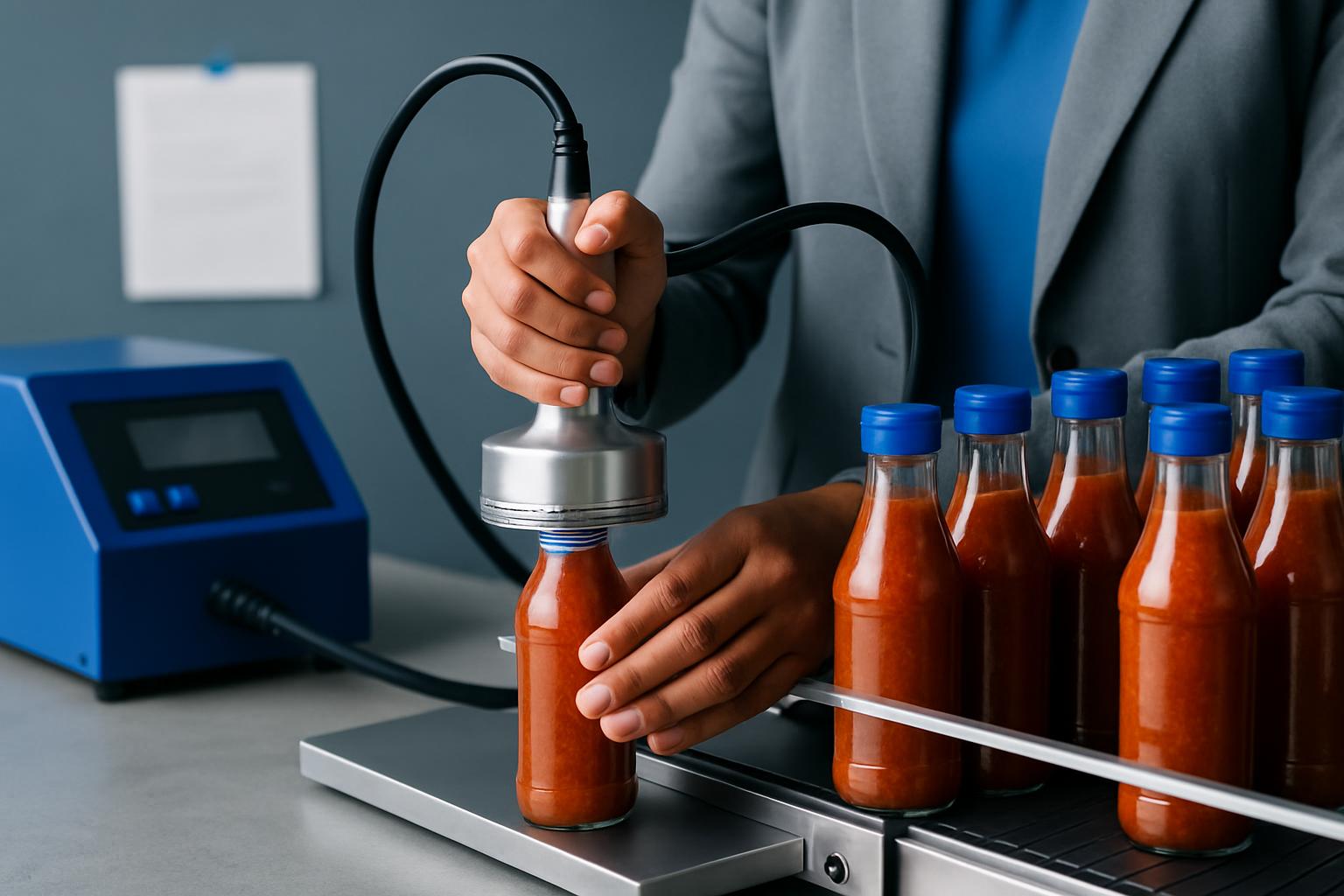
Manual Hand Sealer at the farm stall
A farm-stall sealing table has a different problem from a factory conveyor. The batch may be forty bottles between customers, the capper may be a hand tool, and the next neck size may arrive in a crate under the counter. The Manual Hand Sealer suits that pace because the operator controls every bottle.
On South African short runs the variation often comes from mixed packaging bought in small lots, warm outdoor counters, product on the bottle land, and power restarts during weekend trading. The portable wand still needs a flat aluminium liner pressed against a clean neck finish while heat bonds the seal layer. Hand work needs a written rhythm, not guesswork.
Why the farm-stall seal fails
The first fault is often a liner that matches the cap thread but not the bottle land. It may sit proud, bridge a narrow finish, or wrinkle when the cap is tightened. Use the Foil & Die Kit to match the wad and cutting die before the batch starts, especially across 28, 33, 38 and 45 mm packs.
The second fault is uneven cap pressure. A cap that is finger-tight on one bottle and forced hard on the next gives two seal faces. A sticky sauce rim, honey smear or oil film also breaks the bond at the edge. Put rejected first-offs in a marked tub, then fix the cap seating or neck cleaning step.
A repeatable hand method
Set the short run up in order. 1) Confirm bottle neck, cap and liner as one matched set. 2) Wipe the bottle land after filling. 3) Fit the cap with the same hand feel or torque tool. 4) Hold the wand to the same height mark above the cap. 5) Run the selected power and count. 6) Park the handpiece on a wand stand.
First-off checking should happen before the customer queue builds. Open one bottle and pull the foil to see a full bonded ring on the bottle land. Look at the foil face for burns, pinholes or loose crescent edges. Turn another sealed bottle upside down over a dry towel. If the fault repeats, change one variable at a time.
What to write in the seal-floor journal
The journal gives the next operator a starting point. Record product, bottle material, neck size, cap supplier mark, liner description, die size, cap torque method, wand power, dwell count, operator name, batch time and first-off result. Add the fault code in plain words: loose edge, scorched centre, wet land, tilted cap, missing liner or wrong wad.
Maintenance notes belong in the same record. Write down when the wand face was wiped, when the cable was checked for cuts, and whether the stand held the handpiece without pulling on the lead. Keep liner cartons closed between changes so dust and moisture stay out. After a power interruption, seal and test fresh samples before returning stock to sale.
Worked example from a typical stall line
A Worcester farm-stall line packs 250 ml chilli sauce in PET bottles with a 38 mm neck on Friday afternoon for Saturday sales. The first two peel pulls show a loose crescent on one side. The journal shows a capper swap after lunch. The operator wipes the necks again, uses the same capper for the next trial, keeps a three-count wand dwell, and records the pass samples.
That example is typical of farm-stall lines: the sealer was not the only variable. The fix came from matching the liner, making cap pressure repeatable and proving the first-offs before stock moved to the counter. For neck checks, foil wad matching or service parts, use our contact form or collect through the counter in Meadowdale Industrial, Germiston.
What our Bottle Sealing customers say
Verified Google reviews
