
Richards Bay
Richards Bay chemical jerry
Steam Tunnel L on wide-mouth cleaner packs.
Richards Bay chemical jerry
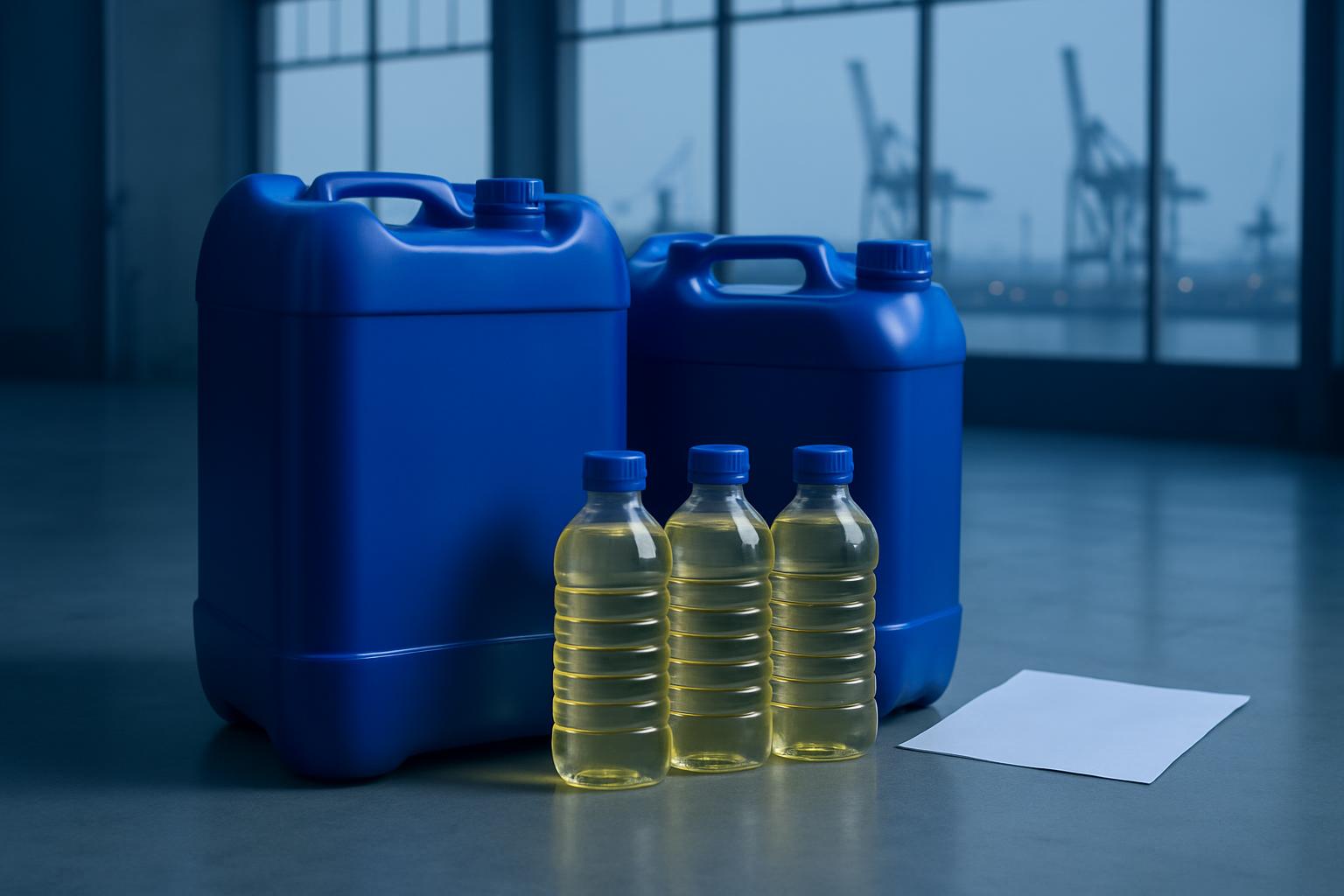
At the Richards Bay chemical plant, the project centred on wide-mouth cleaner jerry packs running through a Steam Tunnel L. The pack shape set the work: a handle recess, broad shoulder and flat label panel that showed water marks quickly. The plant wanted neat tamper sleeves at up to 60 bpm while keeping the cleaner filling routine and conveyor path.
The job started after operators saw good sleeve shrink over the cap, but damp shoulders still reached labelling. In Richards Bay’s humid coastal air, steam condensate sat in the handle recess and along the shoulder. That moisture lifted label edges and left marks, so the brief covered sleeve fit, steam dwell, bottle pitch and drying time together.
Survey on the cleaner jerry line
The site survey followed the pack through filling, capping, sleeve placement, the tunnel and the label handover point. For this household chemical line, checks covered jerry width, cap diameter, shoulder shape, handle position, conveyor transfers and straight-run space after the tunnel. Bottle pitch was marked because wide jerries can shield each other from steam.
Sleeve samples were checked for lay-flat width, height and tear perforation landing after shrink. The tear line had to sit where a gloved operator could start it without fighting the cap skirt. The survey also checked steam pressure, drain fall, hood seating and the loading position, because a skew sleeve at entry becomes a twisted sleeve at exit.
Set-up sequence and sleeve tuning
Set-up began with guide width and pack pitch, then hood position and steam pressure. Dry jerries were run first to confirm tracking and sleeve position, followed by filled cleaner packs once the line was steady. The setter adjusted line pace in small steps to build the right dwell without dragging the lower sleeve edge onto the jerry shoulder.
During the first full passes, the team watched the cap skirt, shoulder line and handle side of the pack. A wide-mouth jerry can look finished from the open side while the handle side still needs more steam wrap. Sleeve height stayed high enough for a clear tamper band, with perforation checked after shrink because a loose sleeve can rotate.
Condensate fault found after commissioning
In the first weeks, labels lifted on some packs although the sleeve finish looked acceptable at tunnel discharge. The fault was traced by stopping jerries after the tunnel and tilting them over a tray. Water ran from the handle recess and off the shoulder. A hood inspection also found a small bypass drip, adding condensate to the upper face.
The correction was mechanical and repeatable: bottle pitch was opened, the steam hood gasket was reseated and the drain path was cleaned. The plant then added an air knife position, with a longer dry run used during heavy humidity. The sleeve still received enough dwell, while the label panel reached labelling dry.
How the line is run now
Operators now start the run by checking steam pressure, first-pack sleeve position, bottle pitch and shoulder dryness. The steam start guide suits this shift handover because it follows the order used at the machine. A small group of jerries is held after the tunnel so the handle recess can be inspected before release.
Daily care stays close to the machine: wipe the hood lips, clear drains, inspect the gasket imprint, remove sleeve fragments near the guides and check conveyor contact points. For repeat settings or coastal drying queries, Marnus Esterhuizen handles steam and sleeve tuning. The counter is at Meadowdale Industrial, Germiston, and project queries can be sent through our contact form.
What our Bottle Sealing customers say
Verified Google reviews