
Line
Spirits and RTD
Spirits and ready-to-drink lines needing neck bands that survive cooler condensation.
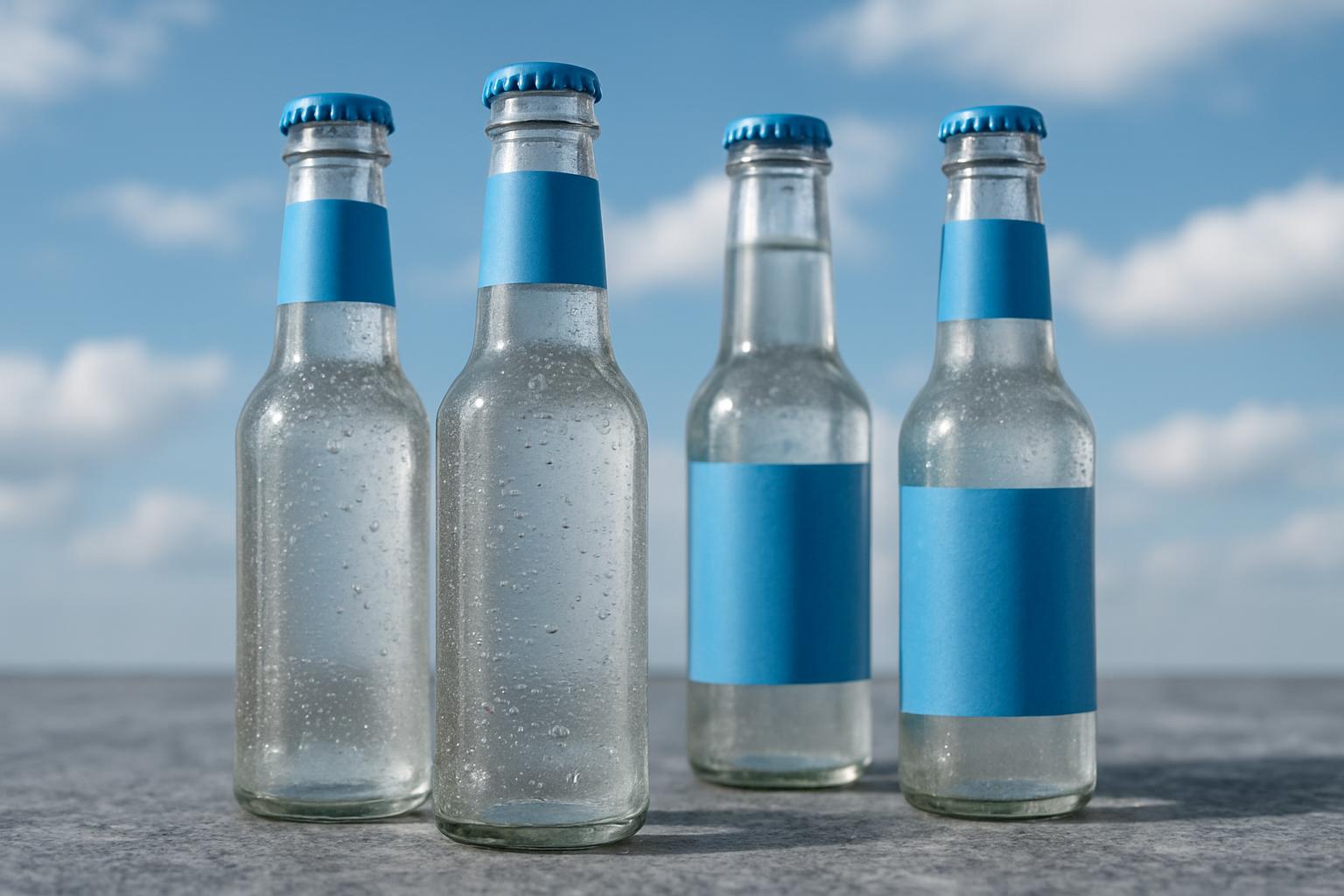
Spirits and RTD
South African spirits and RTD packing floors see glass spirit bottles, PET mixer bottles and promotional formats that need a clean tamper band after chilling. For higher beverage runs, the Band Shrink 240 is set as the main neck-band machine, running as twin 120 bpm lanes with steam tuned to grip the cap and neck.
Closures range from ROPP caps on spirit glass to plastic screw caps on RTD bottles and taller cocktail-style caps. Fill conditions change the job: ambient spirit, cold carbonated RTD and stock from cold rooms all behave differently at the neck. Moisture on the cap affects sleeve grip, drying time and carton finish.
Sleeve fit and steam settings
A setter starts by measuring the sleeve flat size on the capped bottle, then records sleeve height, tear perforation position and bottle pitch. Too much height catches the shoulder and wrinkles; a shallow sleeve can leave too little grip below the cap and split poorly at opening. Closely spaced bottles reduce steam contact around the neck.
Steam pressure and dwell are set together. Low steam or a rushed pass gives a loose lower edge after fridge time. Too much steam can pull PET-G hard under the cap skirt, distort print and move the perforation out of line. A check against band sleeve sizes cuts waste during format change.
Recommended line set-up and sequence
BottleSealer places the bander after capping, with guides holding each bottle square as the sleeve is presented. Shorter co-pack runs can use the Band Shrink 120 on one lane with the same checks for steam pressure, dwell and perforation. The Line Integration Rail carries the bander, sensors, guides and reject point.
The running order is filler, capper, neck wipe or air blow-off where fitted, sleeve application, steam shrink, condensate run-off, drying, visual band check, label placement where used, then tray, carton or case packing. The drying section needs open travel because a wet neck band can mark cartons and spoil a multipack finish.
Failure modes seen on beverage floors
Loose bands after refrigeration often trace back to sleeve width chosen on a dry bottle, then never checked on chilled stock. A band that rides high can come from bottle pitch changes, cap height variation or a sleeve feed angle that pushes the band before it sits level. Spiral wrinkles point to guides touching the shoulder or a bottle turning under steam.
Tear perforation faults show fast on spirits and RTDs because shoppers test the cap in store. If the perforation sits too low, the customer tears into the neck band instead of opening the cap. If it sits too high, the tamper bridge can remain under the cap lip. Hood condensate can spot printed sleeves and soften cartons downstream.
Fit notes, maintenance and a typical brief
Maintenance is practical floor work: keep steam traps draining, check the hood seal for leaks, open condensate paths, wipe sensors, confirm sleeve tray alignment and watch the belt surface for wet build-up. After washdown or a power-cut restart, run a short batch through steam, drying and packing checks before the first RTD pallet.
One Gauteng beverage packer needed a sleeve cell for weekday RTD necks and premium spirit glass packed ahead of weekend despatch. The set-up used the dual-lane bander for RTD volume, saved a slower single-lane recipe for spirit glass, and logged sleeve height, tear line, bottle spacing, steam setting and dry-off time. A similar beverage brief is shown in the Stellenbosch wine RTD project.
For a spirits or RTD sleeve assessment, send bottle neck size, cap type, sleeve material, target rate and pack photos through our contact form, with notes on chilled stock, neck moisture and the carton finish expected after the drying section.
What our Bottle Sealing customers say
Verified Google reviews