Bellville
Bellville water bands
Dual-lane sleeves on a water plant peak week.
Bellville water bands
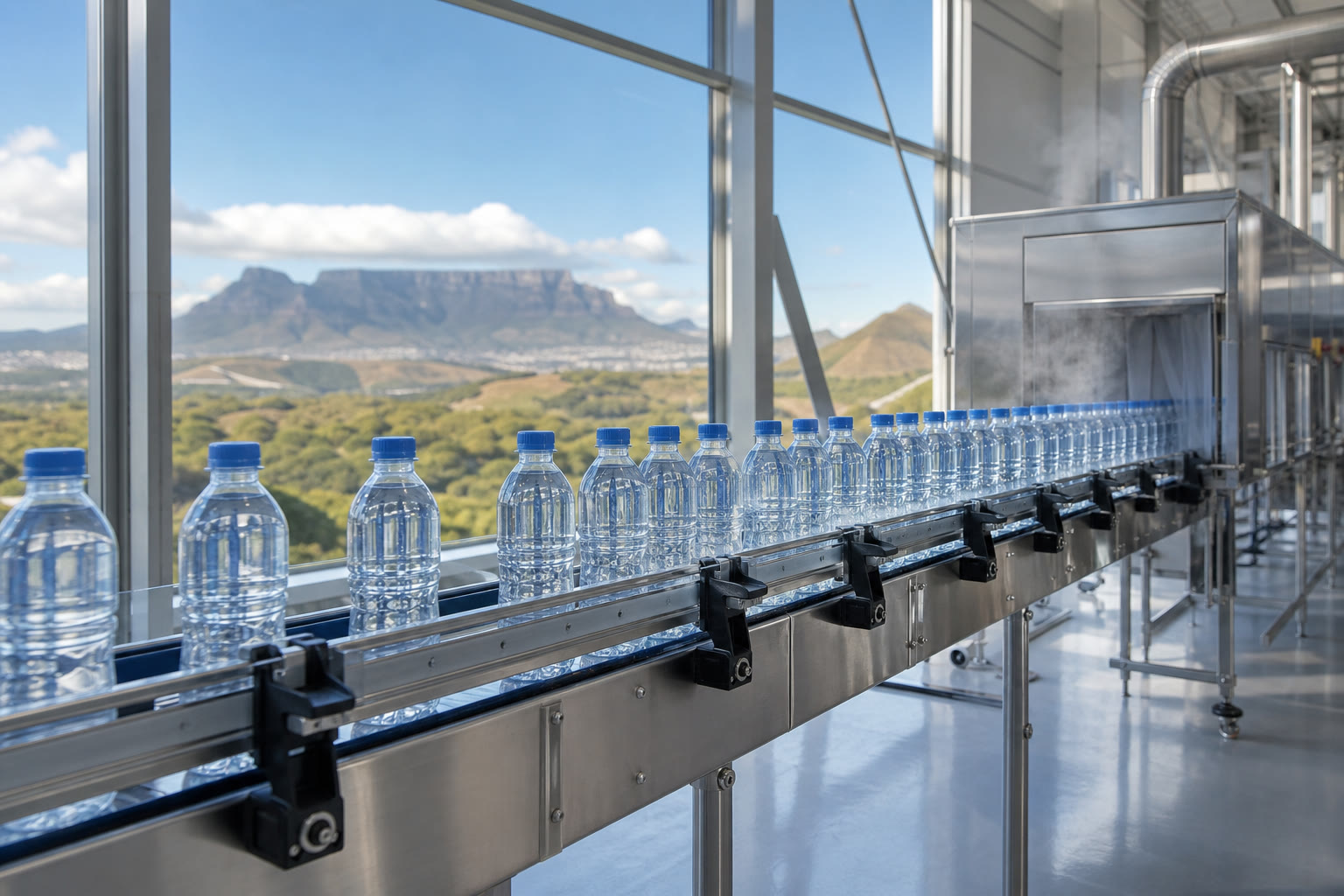
Bellville peak-week water runs needed faster neck banding on clear bottles with a 28 mm finish and a short shoulder. The plant was running supermarket promotion sleeves in bursts, so the brief centred on steady sleeve placement, repeatable steam dwell and dry bottles after steam. The chosen cell used the Band Shrink 240, with two sleeve lanes at 120 bottles per minute each.
The product set the job detail. Cold-fill water bottles carry light tamper sleeves that must sit square on the cap skirt, cover the neck band area and tear cleanly at the perforation. Too much sleeve height wrinkles on the shoulder; a short cut under-covers the cap skirt on shelf. The first visit measured bottle pitch, cap height, shoulder angle and drainage space.
Survey and layout
The Bellville survey started at the capper exit and followed the bottles through the straight run. Bottle pitch was checked during stop-start running, because water lines often open gaps after a short hold and then bunch during restart. Adjustable side guides on the Line Integration Rail were set to the bottle body so the sleeve mandrel saw the neck in the same place each pass.
Sleeve samples were checked for lay-flat width, band length and the perforation line relative to the cap opening grip before steam was raised. The tray angle and lane dividers were then set so sleeves presented squarely to each bottle, with no twist at the leading edge. The plant team marked a wet-zone boundary around the tunnel, giving operators one place to watch condensate, wipe-down points and drying.
Commissioning sequence
Commissioning followed a simple order: guide rail first, sleeve feed second, steam last. The rail was centred with water bottles, then the sleeve feed was run cold to confirm placement over both lanes. Once sleeve height was consistent, steam pressure was raised in small steps and dwell was trimmed by belt pace. That gave the setter a controlled shrink without pulling the sleeve onto the shoulder.
Mr Marnus Esterhuizen, the band technician, led the tunnel tuning on the Bellville floor. His checks covered steam pressure at the manifold, hood sealing, drain fall, sleeve recovery after shrink and drying at the discharge. The same logic suits other beverage packs running through the water and soft drink lines section, where sleeve material, bottle temperature and cap shape change how a band closes.
Fault found in the first weeks
During the first peak run, one lane began showing high bands with a slight curl on the perforation side. The fault appeared after tea-break restarts, not at the beginning of the shift. Operators first adjusted sleeve height, but the mark kept moving, which pointed away from the sleeve knife and towards bottle handling through the hot zone. A slow-motion phone clip showed two bottles touching shoulders as they entered steam.
The fix was mechanical and steam-related. The team widened bottle pitch at the infeed, tightened one side guide that had crept outwards, and reset the sleeve tray so each band landed square before heat. Condensate was traced to a low spot at the hood outlet after warm-up. A new gasket set from the steam hood seal range and a cleaner drain fall stopped droplets landing on sleeves.
How the line is run now
The current start-up routine is short and practical. Operators warm the tunnel, purge condensate, confirm steam pressure, then run a sleeve check on each lane. They look at band coverage on the cap skirt, tear-line position, bottle spacing and discharge dryness before releasing the Bellville water run. If a sleeve shows a fish-mouth gap or a shoulder wrinkle, they move either steam pressure, belt pace, guide position or tray angle, then run another short check.
Routine care now sits with the line setters and maintenance leads. Sleeve feed trays are cleaned after promotion runs, side guide clamps are checked after wash-down, and hood gaskets are inspected for cuts that can throw condensate back onto bottles. For repeat projects, sleeve geometry can be checked against the sleeve feed tray set-up. Repeat Bellville-style work is logged with the sleeve artwork, bottle sample, cap sample and steam settings, so the next promotion starts from the proven band position.
What our Bottle Sealing customers say
Verified Google reviews