
Durban
Durban sauce vision cell
Seal Inspect Vision catching missing foils before case pack.
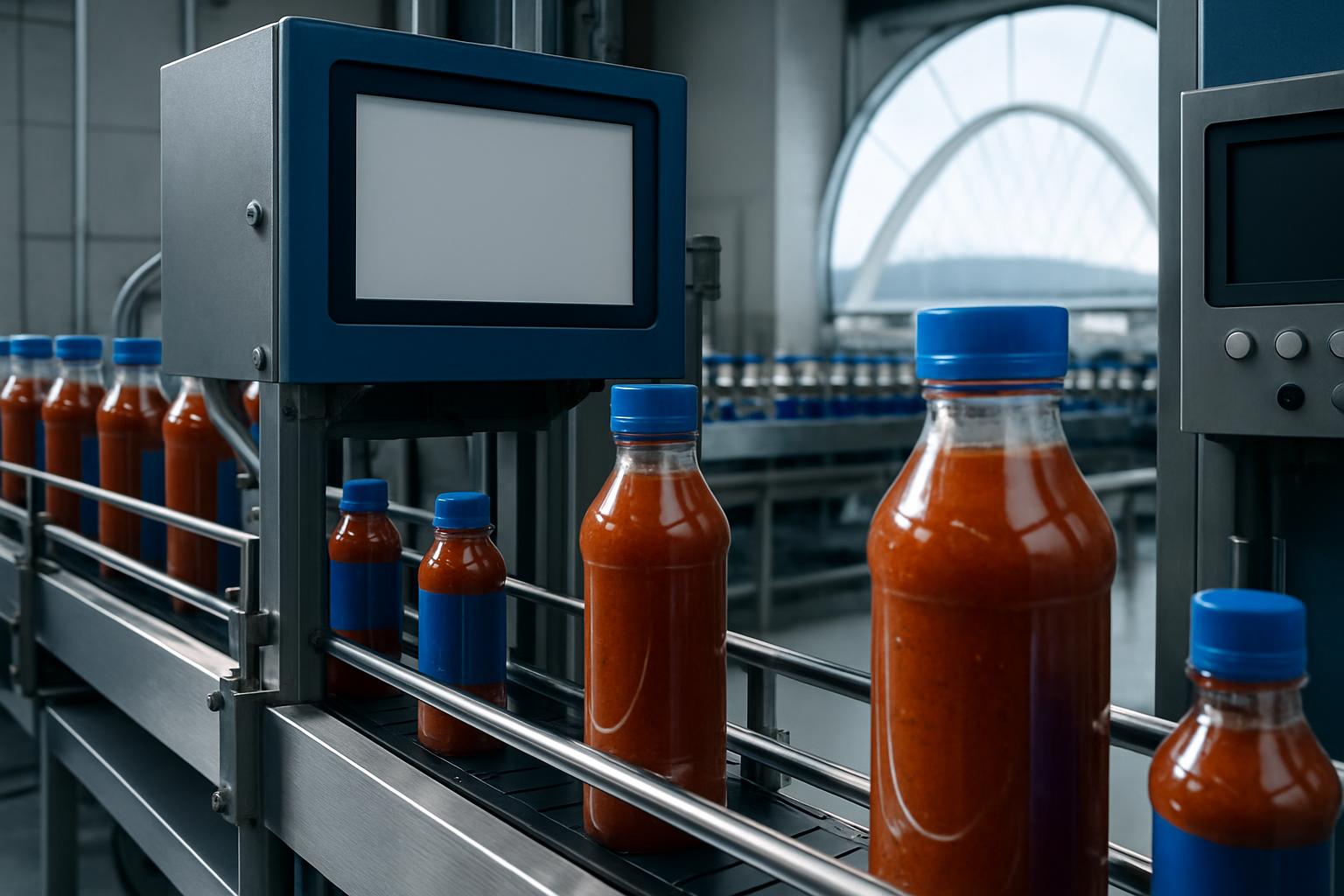
Durban sauce vision cell
A sauce production plant in Durban added Seal Inspect Vision to stop suspect 28 mm and 33 mm capped bottles reaching cartons. The sauce line was already applying induction foil, but operators were still spotting missing foils, lifted liners and cap-top wrinkles by eye during busy runs. The floor brief was to inspect every bottle, reject doubtful packs, and run at about 90 bpm.
The product was a filled sauce bottle with neck finishes that change between 28 mm and 33 mm. Sauce residue around the cap, cap colour changes and tight bottle pitch shaped the inspection brief. The plant wanted the reject point near carton loading, with space for a setter to see, clear and record suspect bottles without stopping the cell.
Survey and fit on the Durban conveyor
The survey covered conveyor width, bottle pitch, side guide condition, capper exit behaviour and open length for camera, light and reject hardware. The inspection window had to see the cap area squarely as each bottle passed. The team also checked for bottle yaw under back pressure, because a turning sauce bottle can be read as a bad seal.
The station was fitted to the existing conveyor using a rail and reject layout similar to the Line Integration Rail. Set-up followed the bottle path: guides first, trigger sensor next, camera and LED light bar after that, then reject air blast and collection point. Good 28 mm and 33 mm samples were taught, followed by known bad examples.
Upstream seal control
Upstream, Seal Induction Pro stayed as the sealing machine for the sauce range. Cap torque and foil selection were checked before vision work started. The Foil & Die Kit was matched to the current neck finish, with the next neck size ready for a range change. The camera could then judge a steady sealing pattern.
The running sequence now starts with the correct foil wad and cap, then torque check, induction sealing and cap-area inspection. Operators keep first-off samples from the sauce run and compare them with the reject pocket during start-up. If the station rejects a pattern, the setter checks cap feed, foil presence, cap torque, rail pressure and bottle spacing before changing the camera recipe.
Commissioning fault and fix
During commissioning, the first 33 mm sauce run showed repeat rejects on bottles that looked acceptable when opened. The fault appeared after a speed adjustment, not during sample teaching. The reject pocket was filling with bottles from the same conveyor section, so the investigation moved to position and timing rather than foil quality. A marked test bottle showed the air blast firing slightly late.
The fault came from two small issues together: the trigger sensor had moved during bracket tightening, and the outside guide was pushing the bottle neck away from the centre of the camera image. The guide was reset, the sensor bracket was locked off, and the trigger-to-reject delay was retaught with marked bottles. The site kept a vision reject map at the line.
Current running and care
On current Durban sauce runs, the setter selects the cap size recipe, confirms the LED light bar is clean, checks reject air pressure and runs a short stream of accepted and reject samples. The station flags missing foils, incomplete seals and heavy wrinkles, then sends suspect bottles into the reject point. The operator records whether rejects came from process faults, changeover debris or timing.
Care on this cell is practical: wipe sauce mist from the camera guard and light bar, check nozzle position after washdown, confirm sensor brackets have not shifted, and keep sample bottles for both neck sizes. Project and line enquiries go through our contact form, with the counter in Meadowdale Industrial, Germiston.
What our Bottle Sealing customers say
Verified Google reviews
