
Germiston
Germiston edible oil line
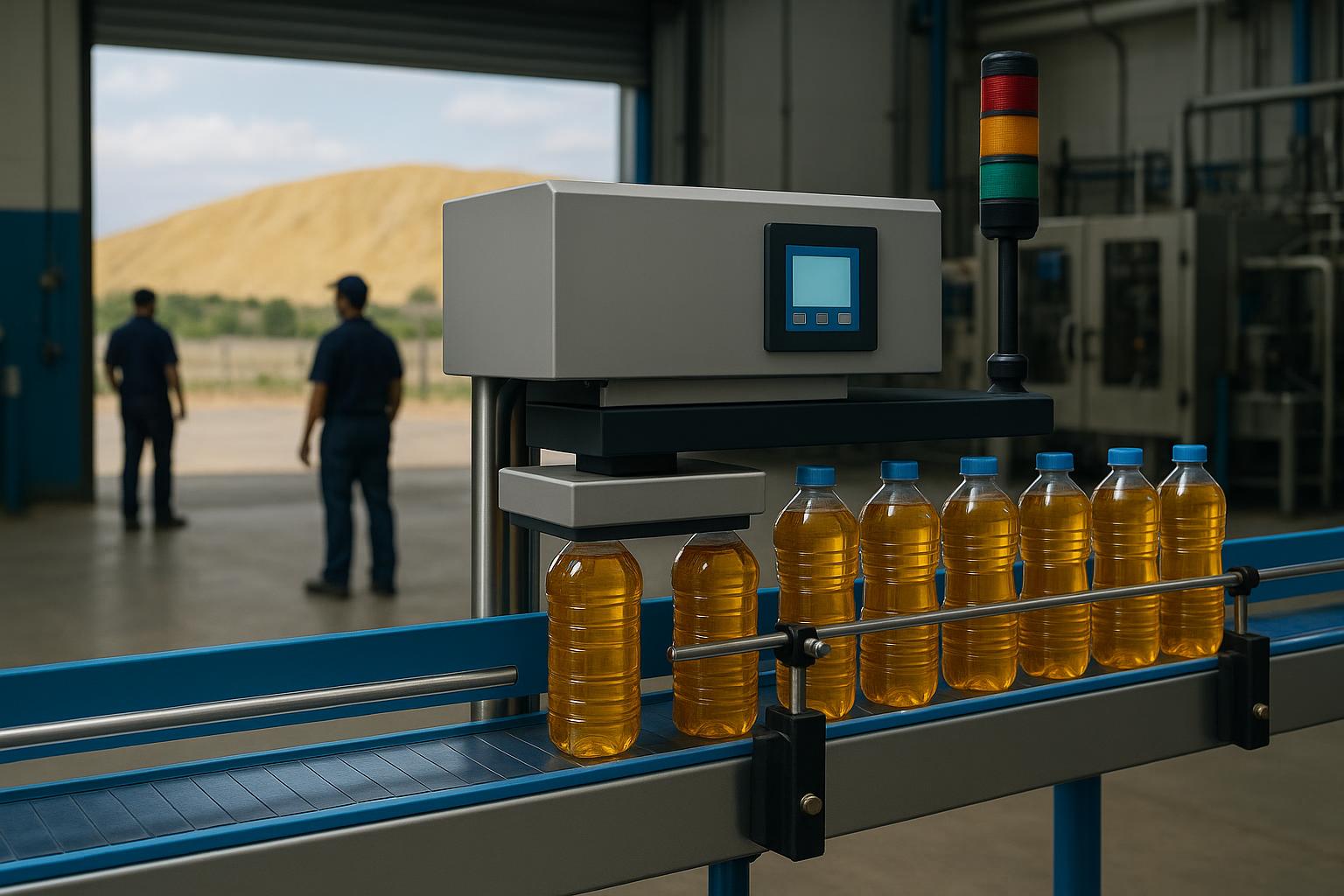
Induction Pro plus vision on a Meadowdale oil co-pack.
Germiston edible oil line
The Germiston edible oil line in Meadowdale was running PET oil bottles with 28 mm and 33 mm neck finishes at the filler’s normal production pace for that pack format. The job started with a co-pack problem: filled bottles needed a tighter seal control point on the conveyor, with reject handling in the same cell. The plant chose Seal Induction Pro with in-line inspection so operators could set by neck size, cap condition and filled bottle behaviour.
Survey at the oil plant
The survey followed the oil bottles from the capper discharge through the open straight run on the existing conveyor. The team checked bottle pitch, guide contact, cap presentation, air supply for reject and access for the operator. The work matched the type of edible oil duty covered on edible oil lines: slippery bottles, cap torque variation, neck finish changes and packed cartons that may lie on their sides during handling.
Ms Khanyisile Mdletshe mapped the conveyor flow, capper position and access around the Meadowdale line, then marked the section where the sealing and inspection cell would sit. The plant needed a conveyor-mounted layout where line setters could swap between 28 mm and 33 mm work without moving bottles off line for a separate sealing step.
Set-up sequence on the conveyor
The Line Integration Rail went in first, with adjustable side guides set to carry the oil bottles straight through the sealing point and into inspection. The induction sealer was then indexed for the selected neck size, power setting and head height above the capped bottle. The reject pocket and air blast were timed from the same bottle pitch used during normal oil filling.
Foil control came next. The selected liner and cutting die from the Foil & Die Kit were paired with the 28 mm or 33 mm closure, with centring confirmed during each changeover. Cap torque was checked so the liner stayed square on the bottle land while the aluminium layer heated and the heat-seal layer bonded. Start-up samples were pulled for peel samples, sight checks and inverted leak samples before release.
Commissioning fault and fix
During commissioning, the first longer 33 mm run sent a pattern of rejects to the pocket even though capper-side checks showed no obvious bottle damage. The Seal Inspect Vision camera flagged incomplete seals and poor liner placement, and the reject blast pushed them out cleanly. The fault did not follow conveyor speed. It followed the neck changeover, which pointed the setters back to liner cut, die position and cap torque.
The fix was carried out on the line. The die was re-centred, the capper was checked for a cap that sat fractionally proud on one side, and the sealer height was reset to the marked 33 mm position. Fresh oil-filled bottles then ran through the cell, with accepted seals checked by peel and leak sampling. Once the reject pattern cleared, the operators recorded the 33 mm settings for the next changeover.
How the line is run now
The Meadowdale oil line now runs with a short start-up routine: confirm neck finish, load the matching liner, verify cap torque, set sealer height and power, then run sample bottles through inspection and reject. Operators watch for scuffed caps, oil on the neck land, tilted caps and liner shift after die changes. Rejects are reviewed at the pocket so the cause is corrected while the filler is still under control.
Maintenance staff keep the rail guides clean, check belt tracking, wipe the inspection light and lens, test the reject blast and keep spare belts, sensors and sealer parts ready between oil runs. For this Germiston oil cell, spares planning focuses on the 28 mm and 33 mm change parts, reject pneumatics and inspection wear items between co-pack runs.
What our Bottle Sealing customers say
Verified Google reviews
