
Isando
Isando rail retrofit
One-bay Line Integration Rail without rebuilding the hall.
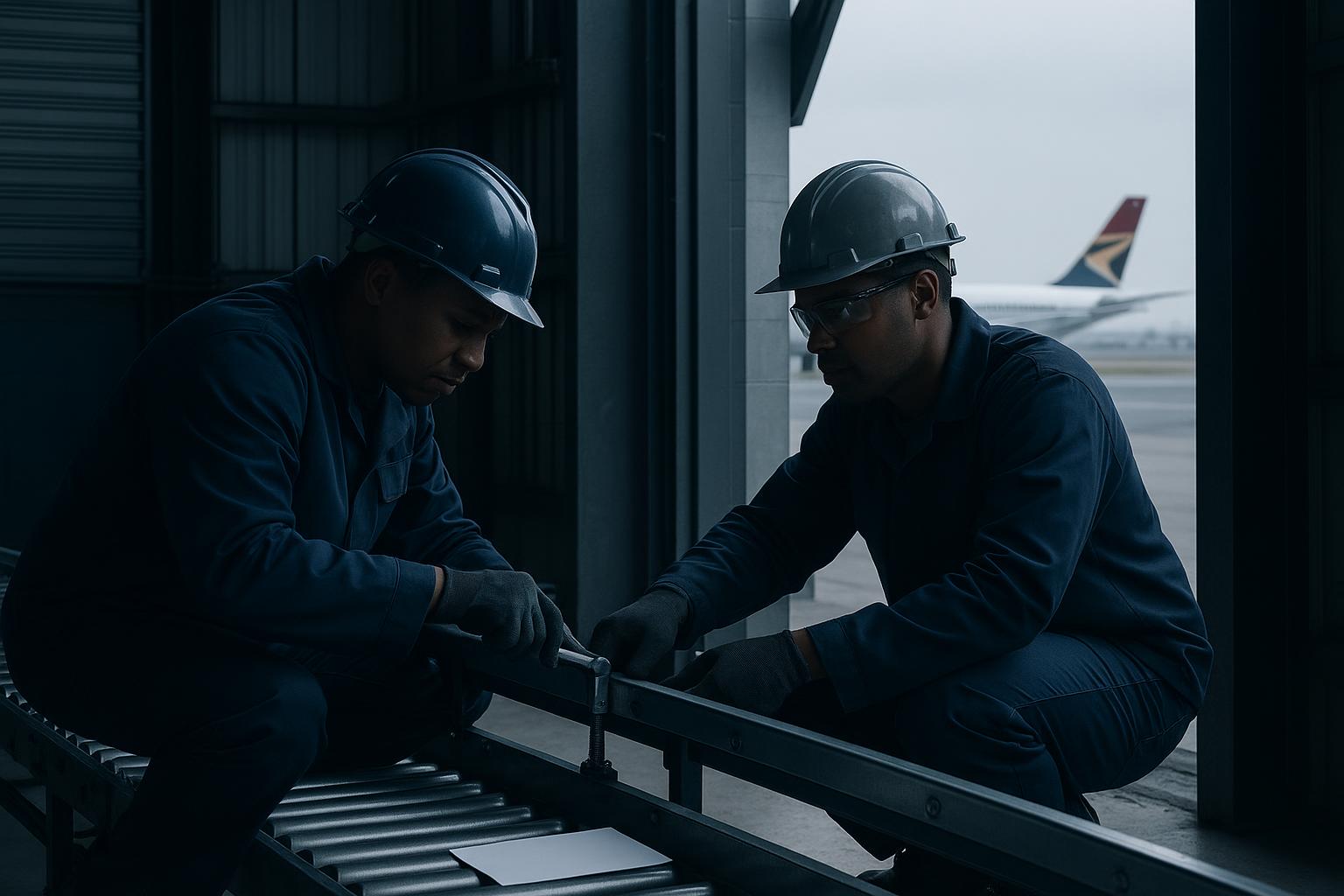
Isando rail retrofit
The Isando plant was packing capped consumer containers in 28 mm, 33 mm, 38 mm and 45 mm neck finishes, but the sealing point had become hard to run. Operators were moving between loose equipment, change parts and reject handling while the conveyor stayed in place. The project brief was a one-bay Line Integration Rail retrofit around that conveyor.
The rail bay brought side guides, 24 V sensing, a reject pocket and a short-run induction sealing position into one work area. Isando line setters needed repeatable positions for start-up, SKU swaps and stoppage restarts. The plant wanted cap torque, head height above the cap and container pitch set from bay marks, not memory.
What started the job
The job started with mixed neck sizes. A 28 mm run could settle quickly, then a 45 mm pack needed a wider guide setting, different cap feel and a fresh reject check. Maintenance wanted fewer temporary brackets and less tool chasing around the conveyor. A compact rail bay gave the plant one place for setting, checking and rejecting packs.
The survey covered conveyor height, belt width, floor access, pack lean, capper exit behaviour and open space around nearby machines. The team marked where operators stood for sampling and where rejected packs could collect without blocking the aisle. A retrofit sketch guided the walk-through; similar planning notes are shown on the retrofit bay sketch resource.
Survey to set-up sequence
Installation started with the rail offered up to the conveyor, then the side guides were set for the smallest container first. The sensing bracket was placed where the bottle presented squarely after capping. Once the reject pocket was bolted in, empty containers were run through the bay to check guide contact, pocket entry and operator reach.
The bay was then set for production hardware. The Seal Induction Compact served as the benchtop unit for short runs at up to 25 bpm, while the Manual Hand Sealer position covered hand-paced packs and trial containers. A Foil & Die Kit change area kept liner work beside the line.
Commissioning fault and fix
During commissioning, the reject pocket fired late on one changeover. Good packs passed, but a test pack meant for rejection travelled beyond the pocket mouth before the air blast caught it. The fault was traced to a sensor face knocked out of square while the 45 mm guide setting was opened. On the next pass, it saw the bottle shoulder late.
The fix started with the bracket. It was squared, the fasteners were locked, and two marked positions were added for narrow and wider guide settings. The reject delay was then checked with capped sample packs at each neck size. The setter now checks the pocket with a known reject at start-up, following reject pocket timing logic.
How the Isando bay runs now
Today the Isando line runs from a short changeover routine. Operators set guide width, confirm cap torque, set head height above the cap, run sample containers, then peel a sample seal, inspect the aluminium foil under light and run a leak test. Rejected test packs go into the pocket, so the line lead can see release status.
Maintenance now treats the rail as part of normal line care. Guide screws are cleaned, sensor lenses are wiped, reject air fittings are checked, and marked positions are refreshed when they fade. Wear points are logged against the rail bay, not scattered across the hall. For Gauteng retrofit briefs, send neck sizes, conveyor width, pack photos and target line speed through our contact form, or arrange collection at the counter in Meadowdale Industrial, Germiston.
What our Bottle Sealing customers say
Verified Google reviews
