
Roodepoort
Roodepoort export week
Documented seal checks before container load.
Roodepoort export week
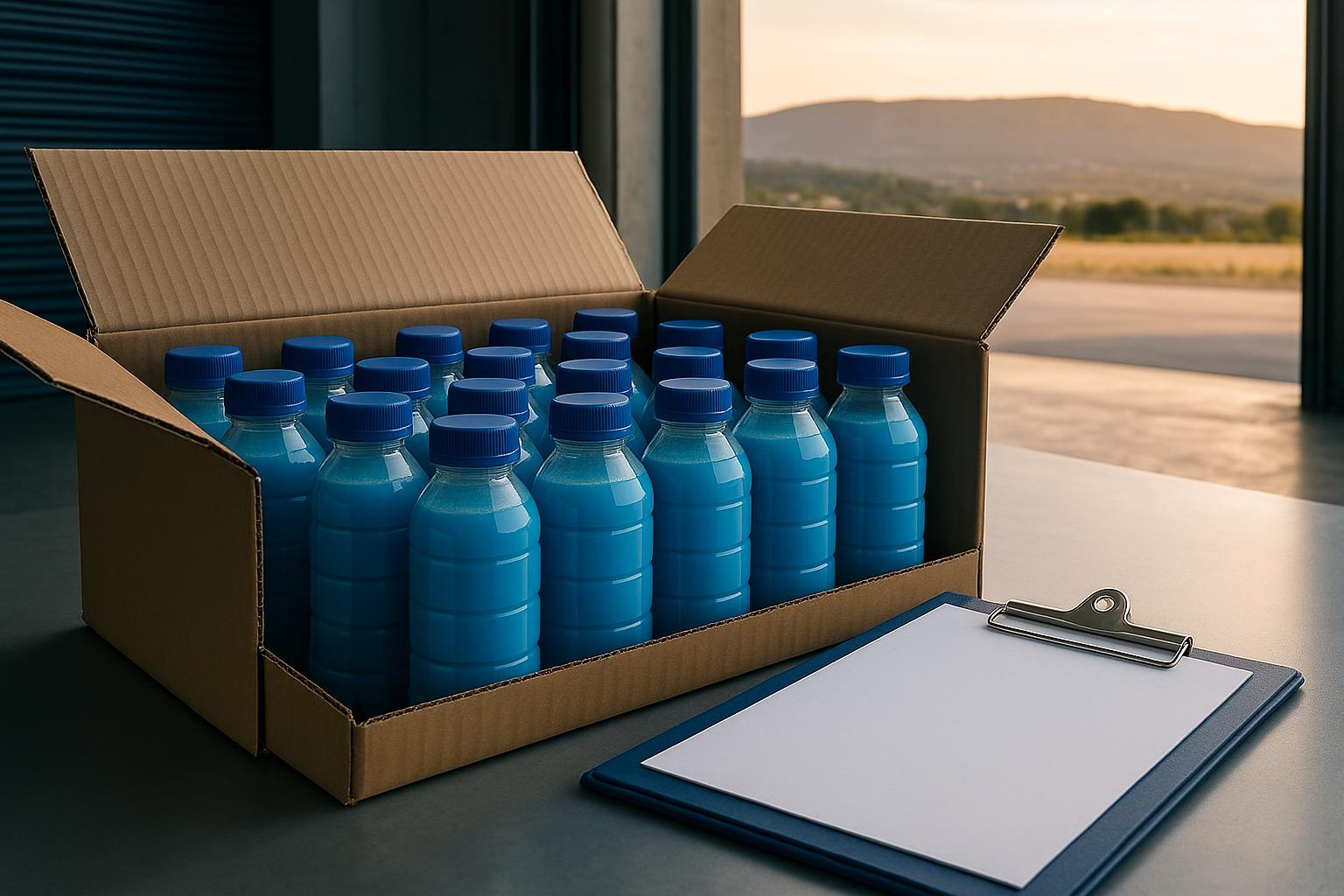
Roodepoort export week centred on capped export bottles that needed recorded seal evidence before container loading. Line staff pulled samples beside the packing table, checked the aluminium foil bond on 28 mm and 33 mm neck finishes, and wrote down the peel result against the cap, setting and operator. Suspect bottles stayed out of packed cases until the setting had been checked again.
The job started when the export packing team wanted a tighter hand-off from sealing to loading. The line already handled short-run bottle work, but container release needed proof that the seal sat cleanly on the bottle land and stayed shut through handling. The brief matched export packing practice: record samples during production, correct the setting while bottles are still on the floor, then release cases with run notes attached.
Survey and set-up sequence
The survey covered the packing table, capped-bottle flow, operator space and where rejects could be parked without mixing back into good stock. The manual station was placed so the setter could test the same neck finish that was running, while inspection sat on the conveyor after sealing. Foils, die change queries and spares planning were handled through Meadowdale Industrial, Germiston via our contact form.
Set-up started with the Manual Hand Sealer and a Foil & Die Kit for the two neck finishes. For each cap, the operator set head height and power, sealed a short sample set, then peeled bottles to confirm clean land coverage. Once those samples passed, Seal Inspect Vision was taught the good seal image and the reject blast was timed with test bottles.
Fault found during commissioning
During commissioning, the camera started flagging foil lift on one run from the manual station. The symptom looked random because cap torque and operator pace had not changed. Pack-off was stopped and samples were split by neck finish, cap batch and die used for the foil wad. The reject images showed the lift starting on the same side of the bottle land.
The die used for that neck finish had worn enough to leave a poor foil edge. The die was changed, fresh samples were sealed on both neck sizes, and leak testing was repeated before cases moved into the export stack. Reject timing was then checked with marked bottles so that a flagged unit landed in the pocket, not among loose bottles on the table.
How the line runs now
The Roodepoort routine is simple enough for a busy export week. At start-up, the setter checks the cap, foil wad, die, head height and power setting against the run sheet. Samples are pulled after the first sealed bottles, after a cap or foil change, and after any stop long enough to cool the station. Seal results stay with the container paperwork.
After sealing, the plant uses Band Shrink 120 for neck bands on the same export packs. The setter checks sleeve lay-flat width against the neck, sleeve height in the 20 to 60 mm band range, tear line position and drying before pack-off. If bands twist, the first checks are bottle pitch, steam contact, sleeve cut and condensate near the exit.
Care after handover
Maintenance now treats the Roodepoort cell as a documented export station. The wand face is kept clean, the die edge is inspected during changeover, the vision light is wiped at shift start and reject air is tested with a marked bottle. Foil wads stay matched to the neck finish in use, and any repeat reject pattern is traced back to cap seating, die wear, foil position or the last setting change.
What our Bottle Sealing customers say
Verified Google reviews
