
Fixture
Foil tray
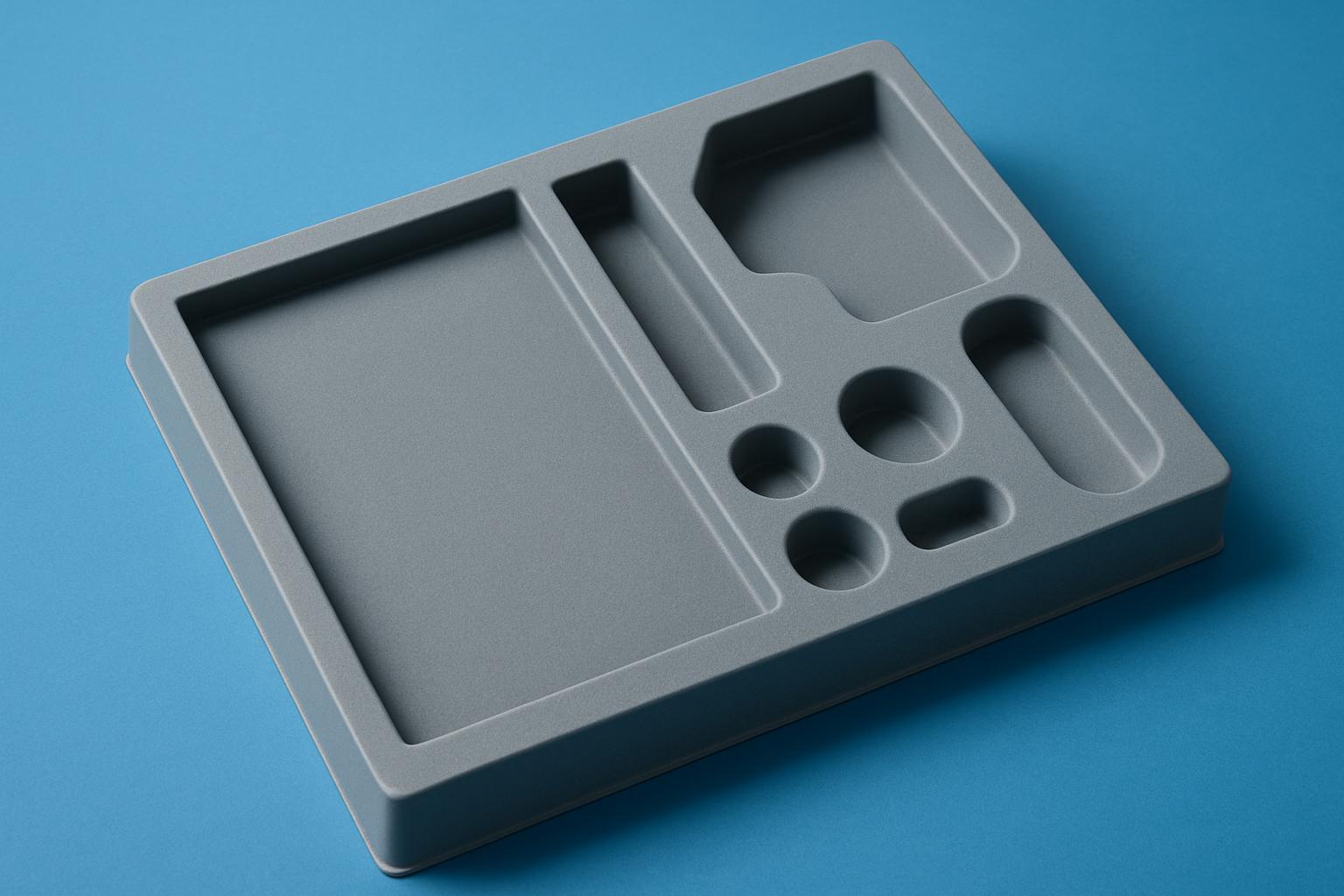
Die and foil tray insert for Foil & Die Kit changeovers.
Foil tray
The foil tray is the line-side storage insert for Foil & Die Kit changeovers. It keeps 28, 33, 38 and 45 mm wads and cutting dies separated by neck size, so the setter can remove one set, park it cleanly, and pick the next set without hunting through loose packets or laying parts on the conveyor frame.
Plants use the tray where one induction sealing cell changes between bottle sizes during a shift. It suits continuous work on Seal Induction Pro, short-run bench work on Seal Induction Compact, and hand-paced packing with the Manual Hand Sealer. The tray stays beside the line as a changeover control point for foil wads, dies and size labels.
Where it sits during a size change
Place the foil tray on the setter’s side of the conveyor, on a clean shelf, trolley top or change-part station within arm’s reach of the induction work area. The position must leave cap feed, bottle guides and operator walkways open. Keep the tray dry and clear of product splash.
Set the pockets out in neck-size order, usually 28, 33, 38 and 45 mm from left to right. Mark each pocket with the neck finish used in the plant, matching the wording on the job card and the foil neck chart. If the tray is fixed to a trolley or shelf, use plant-approved fasteners or anti-slip pads so it stays square when a die is lifted out.
Step-by-step changeover use
Start with a clean tray and confirm every pocket marking before the last bottles of the current SKU leave the capper. Put the next foil wad pack and die in the correct pocket, with the label facing the setter. Keep the removed parts on one side until the change has been signed off by the line lead.
During the change, lift the outgoing die, wipe away loose foil dust, and park it in its marked pocket. Move the matching wad stack into the same size pocket after checking the packet name against the job card. Pick the incoming die and wad stack from the tray, fit the kit, run the first sealed samples, then close or cover the spare wad pack.
Checks, wear and replacement signs
Check the foil tray at every size change for cracked corners, loose dividers, unreadable size labels and trapped foil pieces. A weekly wash-down or dry clean, depending on the plant’s hygiene programme, keeps wad faces free from dust and product residue. After cleaning, dry the pockets before returning foil packs and dies to the insert.
Replace the tray when the base rocks on a flat surface, when dividers spread far enough for dies to touch, or when a pocket lip starts scraping foil wad edges. Other signs are curled wad stacks, mixed neck sizes after a normal shift, chemical whitening of the surface, or repeated label loss after cleaning.
Ordering details to quote
Poor storage shows up as wrong-size foils pulled for a bottle, nicked dies from metal-to-metal contact, and open wad packets gathering dust beside the conveyor. A marked tray gives the setter one visible place for incoming and outgoing parts. That cuts rushed changeover errors on contract packing lines where several neck sizes run through the same induction cell.
When ordering a foil tray, quote the machine it will sit beside, the neck sizes in use, the number of dies per size, and whether the tray will be used on a shelf, trolley or rail-side change-part station. Send the brief through our contact form, or bring the die and wad samples to the trade counter at Meadowdale Industrial, Germiston. Tasneem Latief can match the tray layout to the foil and die sets already running in the plant.
What our Bottle Sealing customers say
Verified Google reviews