
Fixture
Reject pocket
Air-blast reject pocket timed to vision and foil miss signals.
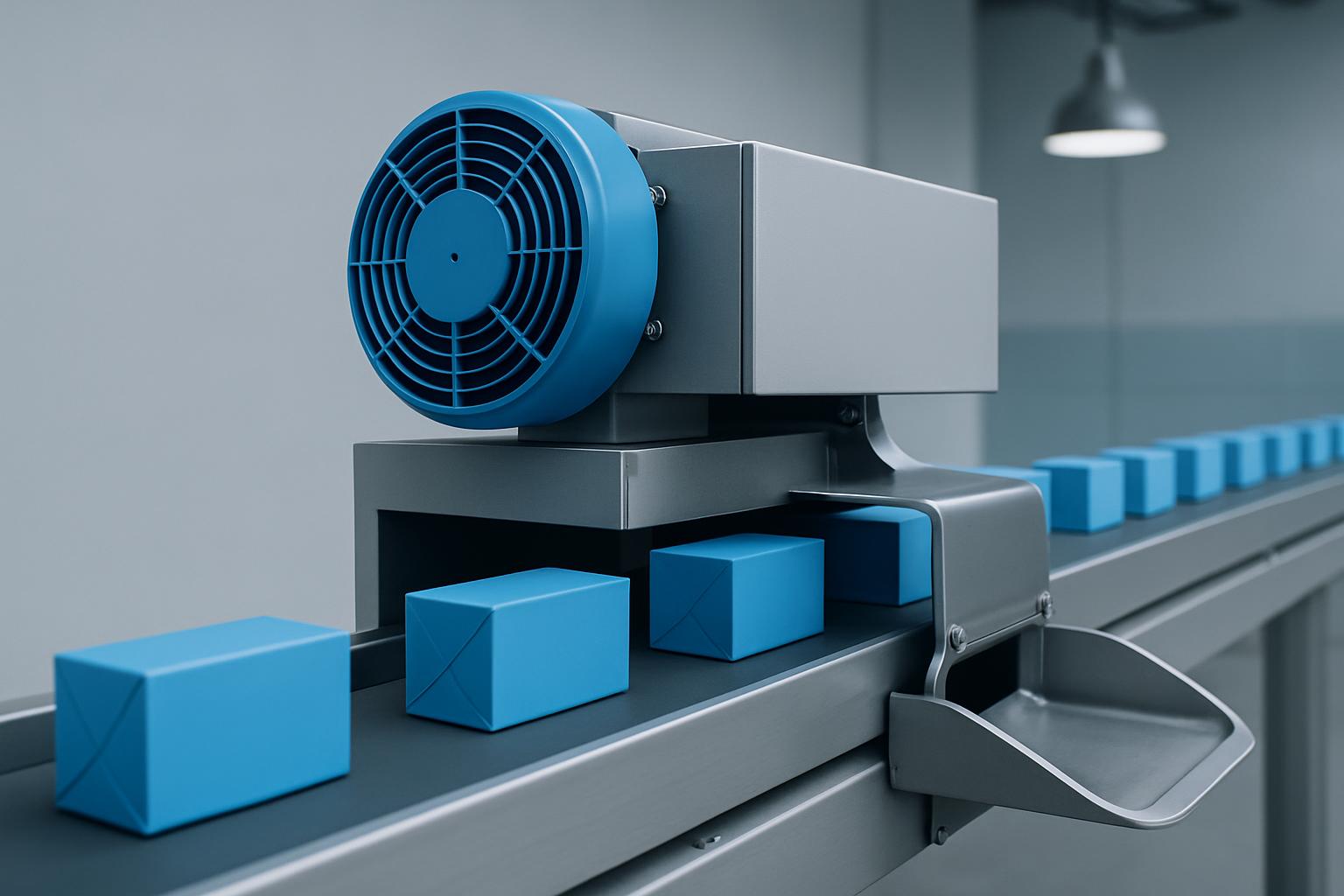
Reject pocket
A reject pocket is the receiving station for bottles that fail an inline seal check. It mounts on the BottleSealer rail cell opposite an air nozzle, so a timed blast can move the flagged container off the main track. Plant teams use it to keep suspect packs together for review while good bottles continue in pitch.
The pocket pairs with the Line Integration Rail, Seal Inspect Vision and sensor kit on conveyor-based sealing cells. It is most often used after continuous induction sealing, including Seal Induction Pro lines, where missing liners, poor seal images or foil-miss signals need a clean side reject point.
Where the pocket is used
The reject pocket suits sauce, edible oil, chemical, nutraceutical and personal-care packs running on PET or HDPE bottles. Common neck formats include 28 mm, 33 mm, 38 mm and 45 mm. The pocket is set around the body shape, not only the cap, because round, square and flat-sided bottles all move differently when hit by air.
Position is worked out from the inspection trigger, belt speed and bottle pitch. The vision or foil-miss sensor sees the container, the controller counts it forward, and the blast must meet that same bottle at the pocket mouth. If the station is one pitch out, good stock gets pushed aside or failed stock keeps moving.
Fitting and first adjustment
Stop the conveyor, isolate air, then clamp the pocket bracket to the rail at the marked reject station. Set the pocket floor level with the belt top or slightly lower, so the bottle transfers without climbing. Tighten the rail clamps evenly. Fit the air nozzle opposite the pocket mouth and aim it at the bottle body.
Reconnect air and the 24 V reject signal, then run marked test bottles at production spacing. Fire rejects from the sensor or vision controller. Add delay if the marked bottle passes the pocket; reduce delay if the bottle ahead is rejected. Move the nozzle in small steps until the bottle slides into the catcher without tipping.
Changeover checks and wear
At each SKU change, record pocket position, guide width, back stop position, nozzle angle and timing value. Tall neck finishes need upper clearance, while flat bottles often need closer side support to stop rotation. Run several good bottles after each reject test to confirm the guides are not rubbing labels, shoulders or cap skirts.
Check the pocket once per shift on long runs. Look for loose clamp screws, cracked catcher corners, worn guide faces, a bent entry lip, blocked nozzle holes and split air tubing. Wipe off syrup, oil, detergent or powder residue, because sticky build-up slows the rejected bottle and can leave it sitting partly in the running lane.
Fault signs and replacement
A missed reject points to timing, low air pressure, a blocked nozzle or a moved sensor. A double reject usually comes from delay drift or bottles touching with no pitch gap. Tipping rejects point to a high blast point or narrow entry. Bounce-back means the catcher angle, back stop or guide clearance needs correction.
Replace the pocket when guide slots no longer hold setting, the catcher is cracked, the lip is bent into the bottle path, or the bracket slips after tightening. Replace worn guide strips when bottles show repeat scuff marks or when a narrow pack rocks inside the set width during a reject.
Ordering information
For quoting, send the rail type, conveyor width, belt height, bottle width or diameter, bottle height, cap size, reject side, sensor type and distance from inspection trigger to pocket centre. Include photos of the current station and any bracket marking. The vision reject map can guide timing notes. The counter is in Meadowdale Industrial, Germiston; send a message through our contact form.
What our Bottle Sealing customers say
Verified Google reviews
