
2026-08-22
Coil height on thin PET walls
Field notes on induction head height when thin PET bottles soften on Highveld summer lines.
Coil height on thin PET walls
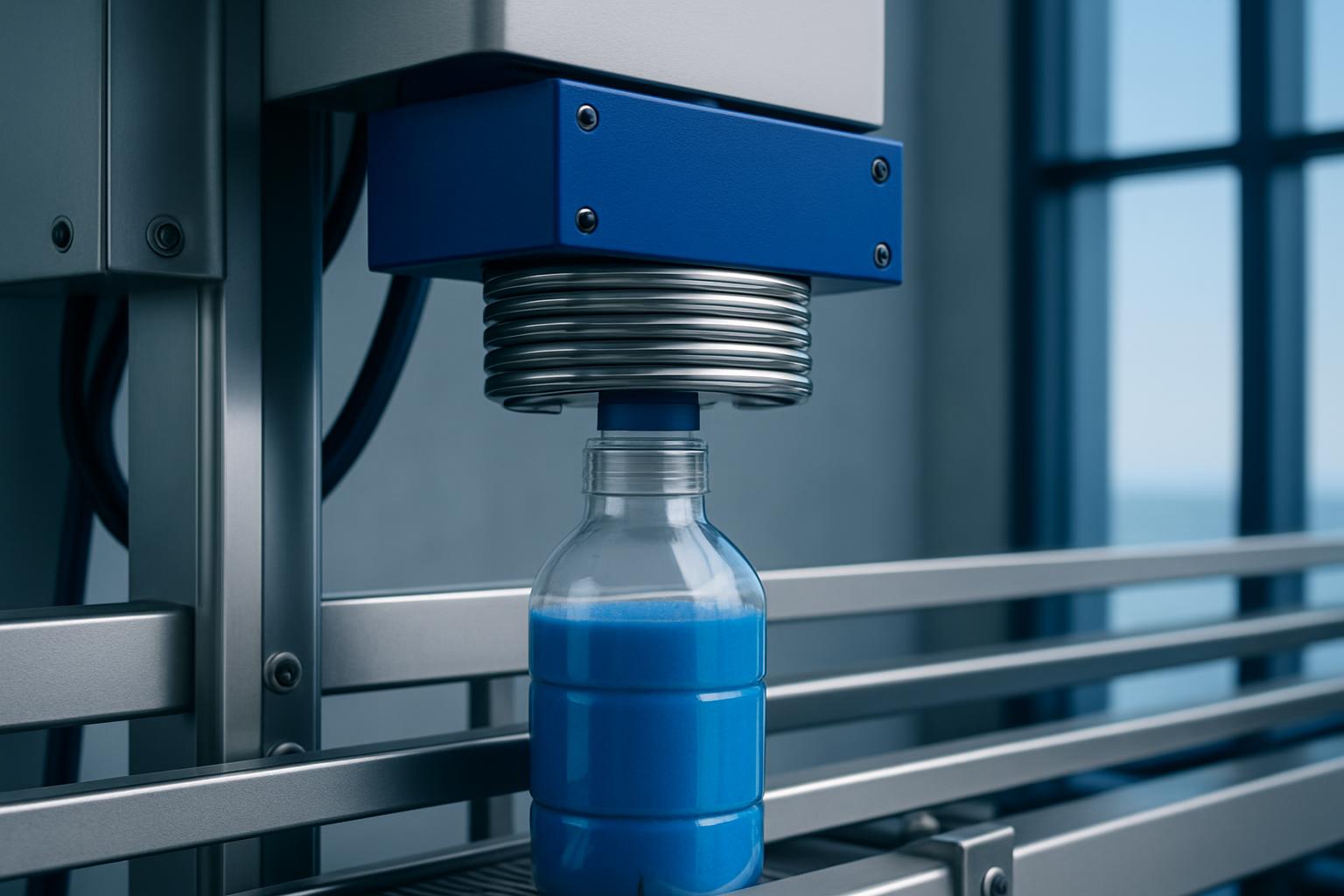
On a hot Highveld afternoon, thin PET neck finishes may arrive at the sealing head with less stiffness than they had during morning start-up. The first warning is often a slight oval shape at the land, a cap sitting proud, or a foil that pulls away in patches. Control the vertical sealing head position first, and record that height as the reference setting for the pack.
South African plants see this after roof heat, stop-start running, and mixed bottle stocks from two moulds in one production week. A setting that seals a heavier HDPE pack can bruise a thin PET finish on a warm shift. Record the head position as a recipe value with the bottle drawing, neck finish and cap type.
Why thin PET moves during the shift
Induction sealing warms the aluminium liner under a closed cap, and the polymer layer under that liner melts against the bottle land as the pack exits the head. Cap torque holds the liner down while this happens, so set torque before chasing sealer settings. With the Cap Torque Station, store one torque recipe per cap and wad stack so the setter starts height trials from a known clamping load.
Two faults point straight at head height. When the head sits too low over a thin PET finish, the neck can pull out of shape near the sealing land and leave a wavy witness mark. When the head sits too high, the liner may lift unevenly and show a patchy bond after cooling.
Step-by-step height setting
Start with the Seal Induction Pro running the actual bottle, cap and wad combination for the order. Confirm cap torque, set guides so the bottle travels centred, and take the first sample at normal fill level and cap feed. Move the induction head in small indexed steps, one change at a time, and keep belt speed steady during the first sample set.
A height-indexed coil mount bracket makes this repeatable across local PET and HDPE neck finishes. Check that the head is square to the cap path, caps pass through the centre line, and side guides are not squeezing the shoulders. During maintenance, clean product mist and cap dust from the station, check the height clamp, and confirm sensor brackets have not crept after washdown.
What to record on the job card
The job card should carry neck finish, bottle drawing, cap supplier, wad lot, die size, torque recipe, induction head height mark, room temperature band, line speed, sample time and operator name. Match wad and die notes to the foil neck chart when a new PET mould enters the store. On the seal check card, record tab pull result, foil face appearance, land mark and inverted leak hold.
When distortion repeats, record where it appears: one side only, all round the land, or only after a stoppage. One-side marks usually point to guide position, cap tilt or a head mount out of square. All-round softening points to head height, heat input and dwell together. Stoppage marks need a restart note, because parked bottles behave differently from bottles passing at line pace.
Worked example from a Gauteng PET line
A typical co-pack run on 33 mm thin PET cordial bottles starts clean in the morning, then shows oval necks after lunch. The setter locks the torque recipe, checks the wad against the die note, centres the guides and raises the head by one indexed step. Ten bottles are taken after the change and left on the QA table while another short run is made.
The raised setting removes the land wave, and the foil face shows an even bond after cooling. The setter writes the new head height beside the summer job note, so the next run starts closer to the afternoon condition. For the next PET trial, send the cap, wad and bottle drawing with the sample notes through our contact form so the height mark can be checked against the finish before production.
What our Bottle Sealing customers say
Verified Google reviews
