
2026-09-19
Meadowdale bay layout notes
How we place rails, coils, and reject pockets in a Germiston bay.
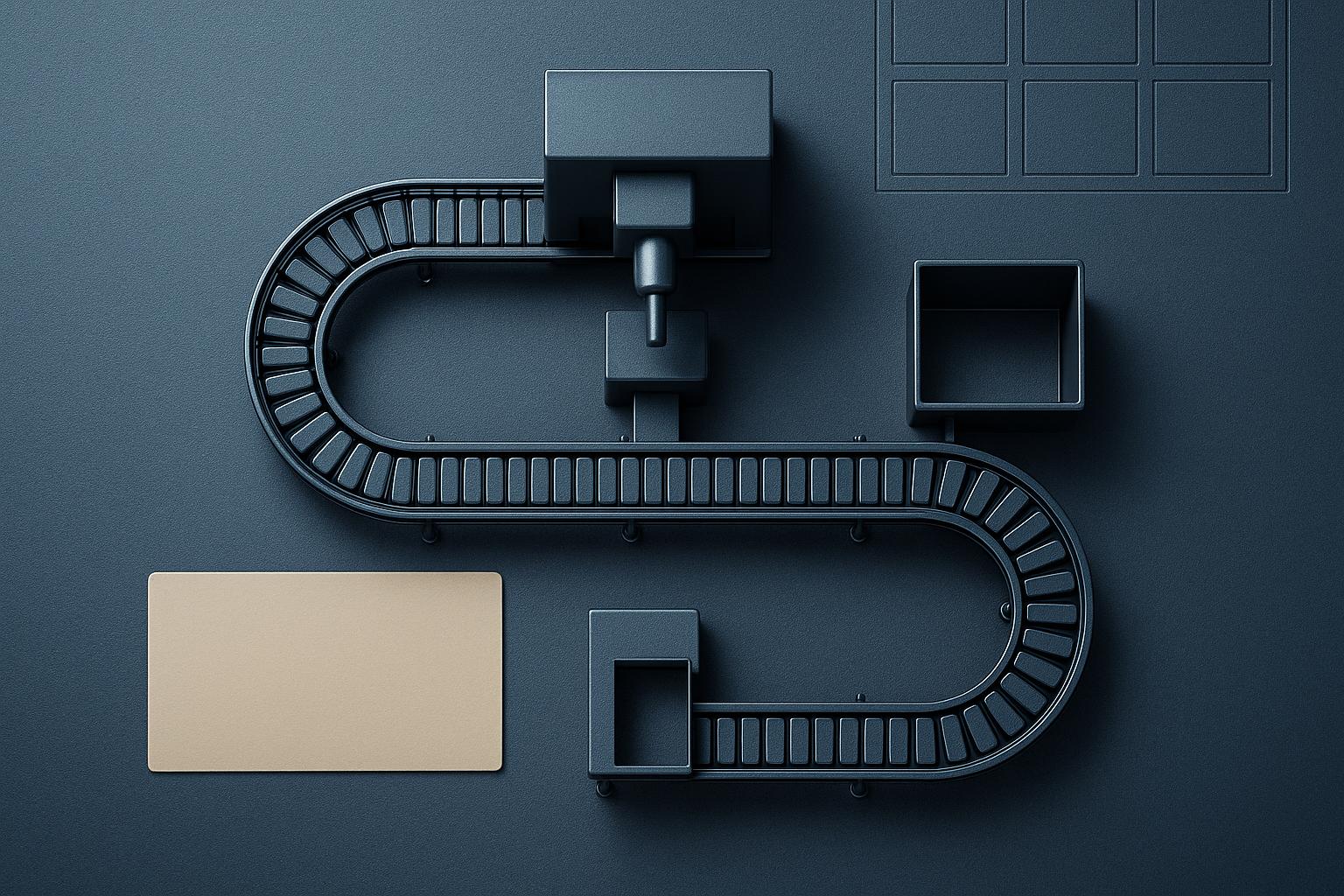
Meadowdale bay layout notes
A sealing bay fails when the layout starts with the machine footprint instead of the bottle path. In Meadowdale layout notes, the first line on the sketch is the conveyor centre line, followed by bottle diameter, cap height, guide width and standing room around the sealing point. Those measurements decide whether the pack reaches the induction head upright and exits with space to reject a fault.
South African plants often put mixed work through one bay: edible oil, detergent, sauces and contract runs in the same week. Different bottles expose weak notes fast. A useful bay sketch gives the setter one order of work: centre the pack, set the guides, confirm cap torque, run seal samples, then prove that failed bottles clear the conveyor cleanly.
Set the bottle path before heat settings
Start by measuring the body and neck against the conveyor centre line. The guides should steady the bottle without loading the shoulder or rubbing the label panel. A standard guide rail section gives the setter a repeatable straight run into the sealing point, which matters when the capper exit is short or the conveyor has a slight side pull.
Cap torque is checked next because the liner must sit flat on the bottle land before the seal is made. On a continuous bay with Seal Induction Pro, the head height index, power setting and conveyor setpoint are proved with sample seals. If a PET or HDPE neck starts to mark, ease the process settings and guide pressure rather than forcing the pack through the bay.
Place the reject pocket for recovery
The reject pocket belongs after the sealing point with enough straight conveyor for the sensor to see one bottle at a time. A shallow pocket can bounce a failed bottle back into the stream. A pocket on the wrong side can turn every reject into a stoppage because operators cannot reach it while the line is running.
Where the plant wants missing liners and poor seals checked inline, Seal Inspect Vision is mapped to the bottle pitch and the air blast is timed into the pocket. The layout note should state sensor position, blast side, pocket side, bin access and the height marks used when the line changes bottle sizes.
Record the settings that setters use
A Meadowdale bay note should record bottle code, neck finish, cap, liner, cap torque recipe, rail width, head height index, conveyor setpoint, sample result and reject delay. Keep the approved cap and liner with the run pack when supplier lots change. A seal check card turns those notes into checks a shift team can repeat.
Maintenance notes should cover clamp tightness, bracket locking, belt tracking, sensor lens condition, air nozzle aim and reject pocket bolts. After washdown, check for water near sensors and inside the pocket. Sketches, photos and changeover notes can be sent through our contact form for comment from the Meadowdale Industrial, Germiston team.
Worked example from a mixed chemical line
A Germiston contract packer running a 500 ml HDPE household chemical bottle had seals peeling on one side and rejects clipping the next good bottle. The bay check found three floor faults: bottles entered the sealer skew, cap torque was below the recipe, and the reject pocket sat too close to a bend. More heat would not have fixed that layout.
The reset used a straight guide section to bring the bottle back to centre, then torque was set against the recipe. Power and conveyor settings were proved on sample seals. The reject pocket moved to the operator side and timing was set by bottle pitch. The final note gave the next setter a short sequence: guides, torque, head index, seal sample, reject test, production start.
What our Bottle Sealing customers say
Verified Google reviews
