
Gqeberha
Gqeberha beverage dual lane
Band Shrink 240 for soft drink peaks at Baywest hinterland.
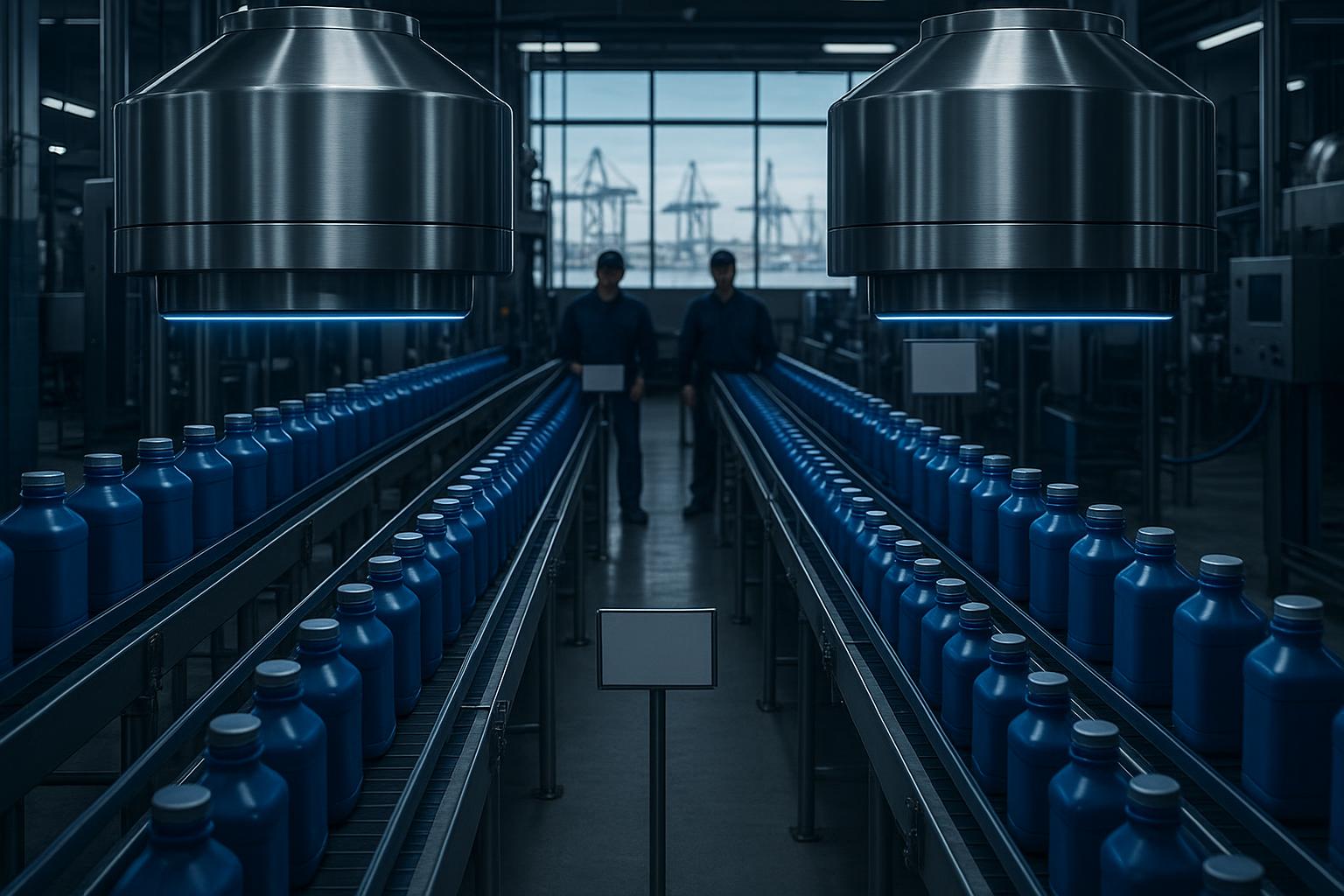
Gqeberha beverage dual lane
A Gqeberha soft drink plant serving Baywest hinterland routes was pushing peak cold-drink runs through a neck-banding area that had become the slow point after capping. The project centred on a Band Shrink 240 set up as two 120 bpm lanes through one steam manifold, so water and flavoured drinks could run side by side with matched shrink finish. The mix covered water, flavoured soft drink and RTD bottles.
The brief was tamper evidence that would hold its shape through chilled storage, crate handling and short-haul delivery. Sleeve selection started with the bottle neck, cap skirt and shoulder shape. Each PVC and PET-G trial sleeve was measured around the cap skirt, trimmed to the neck band height, and turned so the tear line opened cleanly for drivers, merchandisers and consumers.
Survey and set-up sequence
The survey began at the capper discharge, with full bottles used to check pitch, side-guide pressure and transfer stability. Marnus Esterhuizen checked the steam take-off, condensate route, hood position, floor fall and dry-out space after the shrink zone. Bottle centres and guide rail positions were marked before the bander was placed.
Commissioning followed a fixed order. Sleeve lay-flat width was matched to each cap and neck finish, then sleeve height was set to cover the cap skirt and enough neck for visible tamper evidence. The tear perforation faced the same way on both lanes. Steam pressure rose in steps, then dwell was tuned by line pace and bottle spacing.
First-week fault and correction
In the first production week, the left lane showed a crinkled shoulder band and a wet ring on every few bottles after steam. Operators first looked at sleeve feed because the sleeve appeared high on that lane. The trace found two causes together: condensate was sitting along one hood lip, and bottles were closing up at entry.
The correction stayed practical. Condensate was led out of the hood, the hood seal was reseated, and steam pressure was trimmed until the band pulled down without folding at the shoulder. Guides were reset to hold steady pitch into both lanes. The sleeve stop moved by a few millimetres, bringing the lower edge to the same height around the neck.
How the line is run now
Setters now start each run with a short fit check against the day’s bottle and cap combination. They confirm lay-flat width, sleeve height, vertical perforation, steam pressure, dwell feel through the hood and dryness on the exit conveyor. The plant keeps band sleeve size notes with the change parts for flavour and water changeovers.
Operators watch for faults that belong to steam neck banding: a loose skirt from low steam or short dwell, a split perforation from excess heat, a twisted sleeve from poor bottle pitch, and wet downstream packs from condensate carry-over. When one lane drifts, they compare it with the other lane before changing settings during peak shifts.
Maintenance and fit notes
Maintenance focuses on steam and sleeve contact points. At start-up, the crew checks steam drains, hood seals, sleeve tray alignment and the dry-out area. At clean-down, they remove sleeve dust, clear softened band scraps near the hood and wipe rails where sugary splash can pull bottles off centre. Replacement steam hood seals and sleeve feed tray parts sit on the spares list.
For similar water and soft drink lines, the same survey method gives a strong start: confirm bottle pitch, sleeve fit, steam pressure, condensate control and drying space before peak production. For a Gqeberha dual-lane banding review, send bottle samples, sleeve drawings and a short clip of the neck-banding area through our contact form.
What our Bottle Sealing customers say
Verified Google reviews
