
2026-09-09
Dual-lane band for beverage peaks
Sharing one steam manifold across two sleeve lanes on soft drinks.
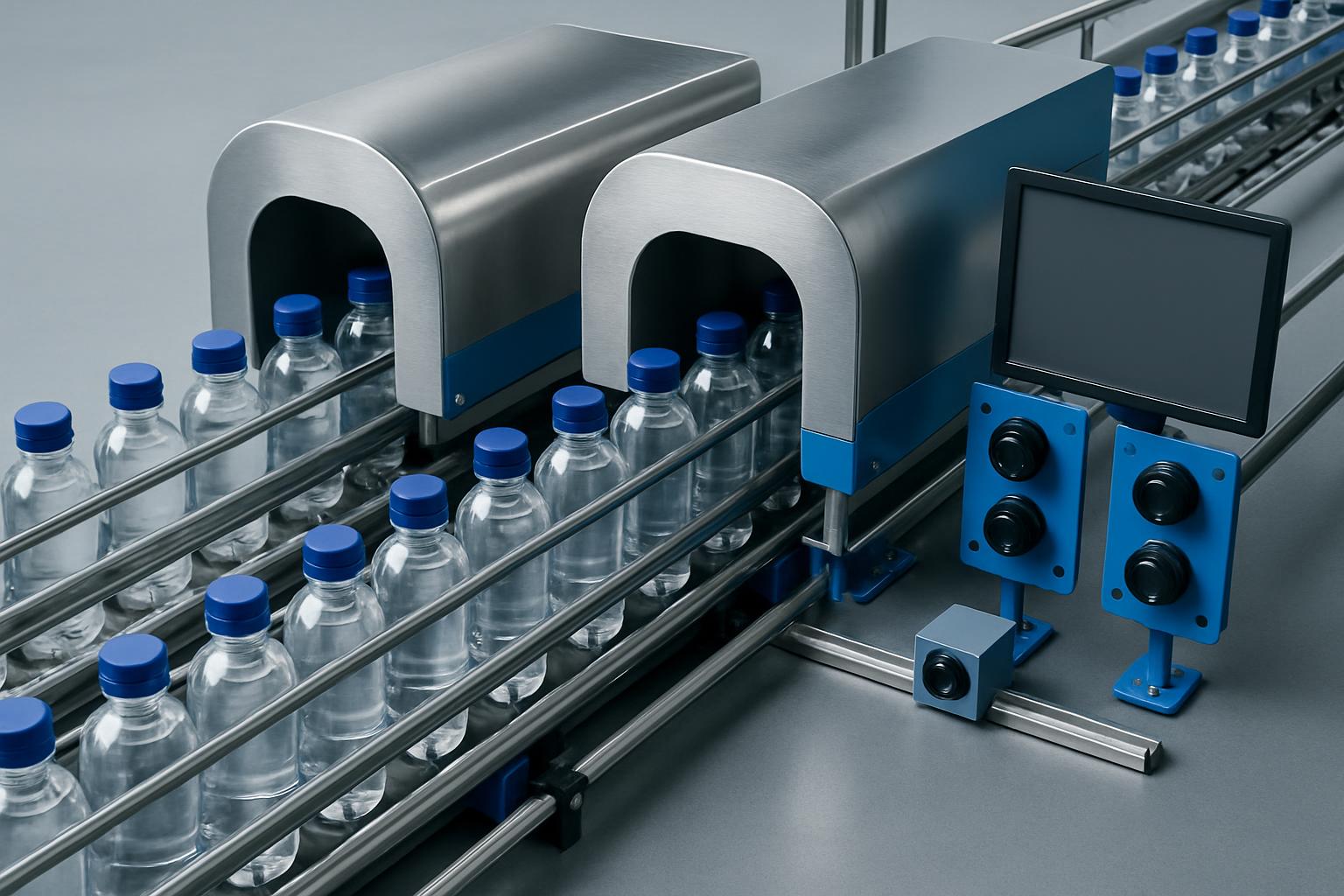
Dual-lane band for beverage peaks
Dual-lane beverage banding earns its keep during South African soft-drink and RTD peaks, where one neck-band cell must carry two steady streams of bottles. With the Band Shrink 240, each lane can run at 120 bottles per minute while both lanes share one steam manifold. That shared steam source demands tight setting discipline.
The customer problem is usually plain on the floor: one lane gives tight bands, the other gives loose shoulders, high sleeves or wet caps. Cold bottles bring moisture into the steam zone, while warm ambient packs react faster. Treat the two lanes as one steam job: set pressure, sleeve cut, drop height, perforation orientation and bottle spacing together, then trim dwell after both bottles show even shrink.
Why dual lanes drift during a peak run
Most drift starts at warm-up. If the tunnel has stood cold after cleaning, changeover or a power cut, the first bottles see unstable steam and cold metal. Use a short warm-up routine from the steam start notes, then run a small batch on both lanes. Compare shrink at the cap skirt, shoulder and lower band edge before releasing the run.
Bottle pitch is the next cause. Crowded bottles enter the steam hood skewed, so sleeves shrink off-centre or pull down one side. Light PET beverage bottles can also flex under guide pressure. Straight transfers and adjustable side guides on standard guide rail sections keep both lanes square, with enough gap for steam to wrap around each neck.
Step-by-step setting method
Set the sleeve before touching the steam valve. Measure lay-flat width against the cap and neck diameter, then confirm cut height against the brand band and tamper mark. The tear perforation must sit where the consumer can grip it, clear of cap knurling and print conflicts. Keep band sleeve sizes with the SKU record for repeat changeovers.
Now set sleeve height at both feed trays and jog bottles through without steam. The lower edge should clear bottle shoulders that may scuff, and the top edge should sit evenly around the cap. Bring in steam in small steps, then adjust dwell until the band grips the cap profile without curling, folding or splitting at the perforation.
Drying is part of the setting, not an afterthought. Open condensate drains, check hood seals and aim exit air at cap grooves and neck shoulders. Cold-fill water and RTD bottles often show good shrink but carry water out of the tunnel. Wet caps lead to carton stains, poor barcode reads and extra wiping at packing.
What to record and inspect
For each neck finish, write down pressure, warm-up minutes, belt pace, bottle spacing, sleeve lay-flat, target drop height and where the tear line sits on the cap. Add pack temperature and any drying setting used on chilled product. Keep one approved banded bottle at the line during the shift so operators can compare height, print position, scuffing and perforation without guessing.
Name failures in simple floor language: high band, low band, twisted band, loose shoulder, curled edge, split perforation, wet cap or missed sleeve. Those words send maintenance to the right place. High and low bands point to feed tray geometry. Wet caps point to condensate and drying. Loose shoulders point to pressure and dwell.
Worked example from a typical line
A Gauteng co-pack cell runs lemon RTD on 28 mm caps in lane one and still water on 33 mm sports caps in lane two. Lane one starts curling at the lower edge, while lane two exits wet. The maintenance lead checks the sleeve feed tray positions and finds lane one set too low.
The team lifts lane one sleeve height by a few millimetres, opens the condensate drain for lane two and re-aims drying air at the sports-cap groove. The run sheet is updated with steam pressure, dwell, pitch and sleeve dimensions for both neck finishes. For mixed-neck beverage trials, bring both cap sizes and band samples to Meadowdale Industrial, Germiston so the feed tray and steam and drying notes can be checked against the actual bottles.
What our Bottle Sealing customers say
Verified Google reviews
