
2026-09-10
Oil leak paths we still see
Where edible oil bottles fail seals and how induction closes them.
Oil leak paths we still see
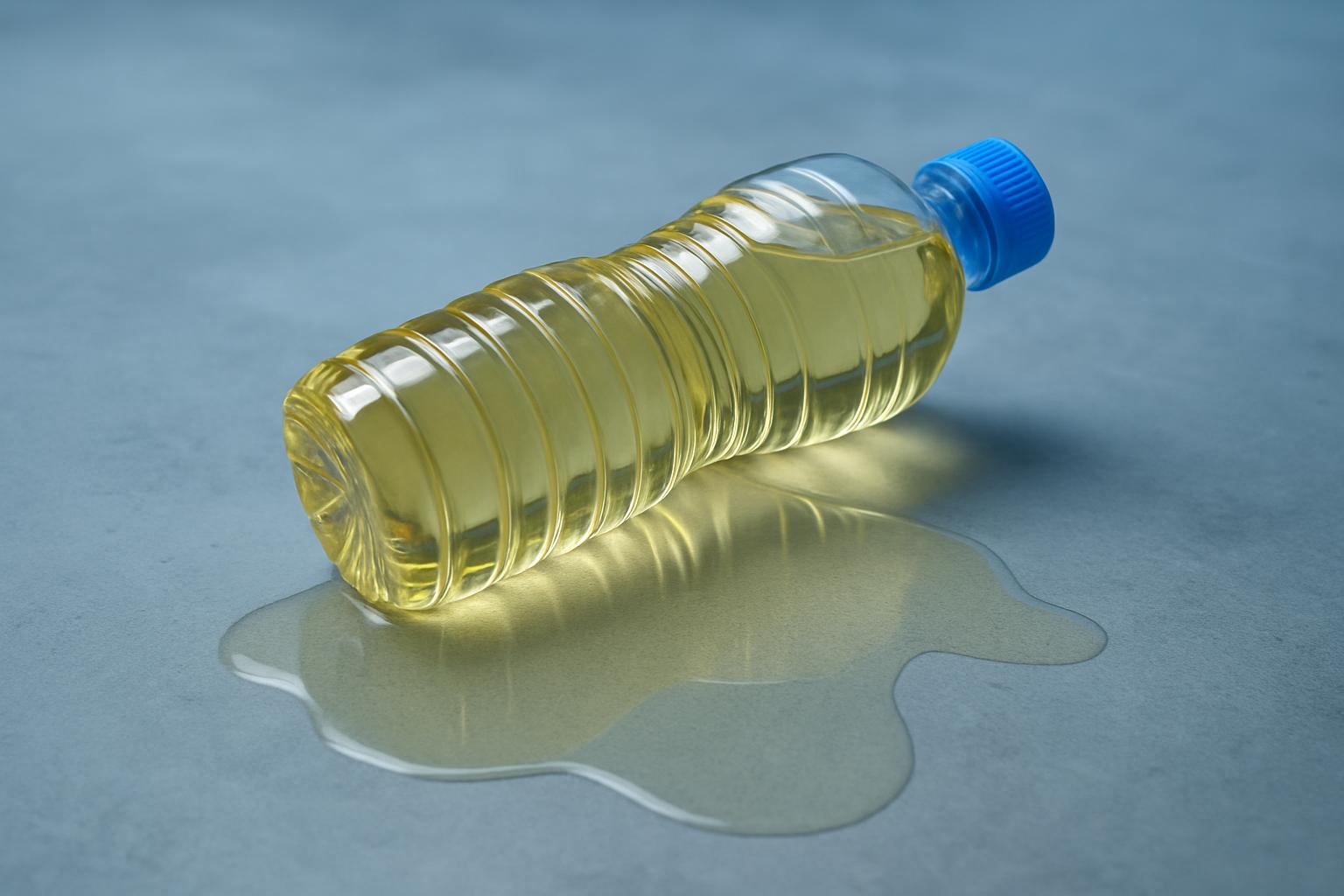
Edible-oil leaks usually show at the cap first: a wet thread, oil on the shoulder, a stained carton flap or a greasy hand when the operator lifts the bottle. The leak path is often a narrow channel under the foil edge where the liner bonded on part of the bottle land and missed the rest.
On PET and HDPE cooking-oil packs, induction sealing closes that channel by bonding the heat-seal layer across the full land after capping. The fault is small, but it travels through packing fast because oil spreads along threads, bottle shoulders and carton fibres before anyone sees a full drip.
Where the leak path starts
South African edible-oil lines see this fault after cap supplier changes, power-cut restarts, dusty bottle storage, quick oil-grade swaps and filler mist around the cap chute. A 28, 33, 38 or 45 mm neck with a chipped land, oval mouth or mismatched thread can hold the liner off centre.
Start at the bottle land, not at the carton. Wipe the neck, remove the cap and look for a crescent-shaped dry patch, wrinkled foil edge or glossy oil track on one side. Match the wad to the neck finish with the Foil & Die Kit, then reject caps where the liner sits skew.
A floor method that closes the channel
Torque comes before heat. The cap must press the liner evenly on the land before the bottle reaches the sealer. If the capper chuck pad is glazed, the bottle is slipping, or the closure recipe was changed by feel, the liner can lift at the weak edge. A Cap Torque Station gives setters a repeatable closure setting.
Run the fault in a controlled check. Collect leaking and passing bottles from the same filler lane and mould group. Inspect the land, thread start, cap liner position and oil on the liner face. Set cap torque to the recorded recipe, then run the bottles through the Seal Induction Pro on the saved job settings.
Prove the seal and record the pattern
Let the bottles cool upright, then do peel pulls and inversion tests from the same sample set. Open failed packs and mark the weak side against bottle orientation. If the weak side follows the conveyor guide, centre the bottle travel. If the weak side moves with a cap batch, quarantine that cap carton and cut open more liners.
Record the bottle size, polymer, neck finish, mould or cavity mark, closure supplier code, wad type, die used, oil grade, cap torque setting, sealer job name, line speed, head position and result of each peel pull. A seal check card keeps production, maintenance and QA using the same fault names.
Fit notes belong on the same record: worn chuck pads, loose side guides, filler drip onto necks, dusty cap hoppers, scuffed conveyor chain and any restart after power loss. On edible-oil packs that are cartoned soon after sealing, Seal Inspect Vision checks foil presence and seal appearance so bottles with a likely leak path can be diverted before oil reaches carton board.
Worked example from a typical edible-oil line
A plant running two-litre PET sunflower oil on a 38 mm closure finds oil on carton flaps after the afternoon restart. The setter pulls leaking bottles from one side of the conveyor and finds a dry crescent under the foil. Maintenance cleans filler mist from the cap chute, changes a glazed torque head pad, centres the guide rails and reloads the saved torque recipe.
The next sample peels evenly and stays dry during inversion. For trial packs, wad matching or a line survey on edible-oil lines, keep the leaking bottles, passing bottles and cap carton together so the dry crescent, liner seat and torque recipe can be compared as one set.
What our Bottle Sealing customers say
Verified Google reviews
